Estimated reading time: 3 minutes
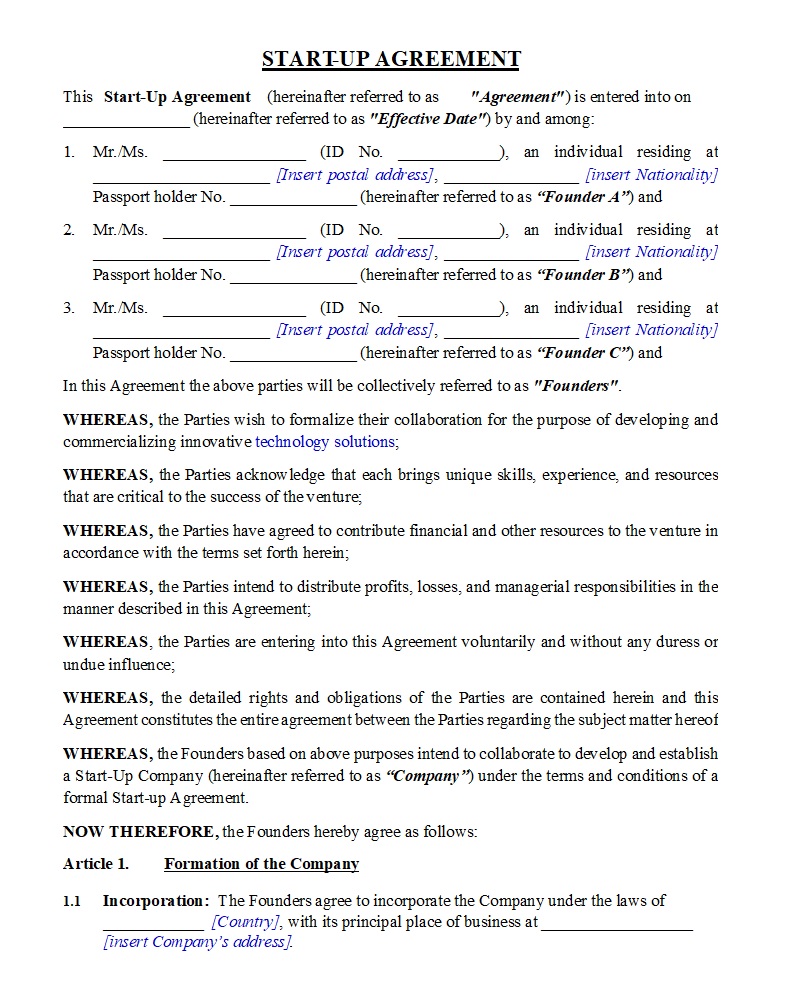
A Start-up Agreement (SUA) sets structured duties for founders based on a clear Business Plan and defines how they cooperate through written expectations. This Agreement supports clear decisions, controlled responsibilities, and aligned governance during early-stage development. The introduction explains what a Start-up Agreement means, why founders depend on it, and how structured terms guide the creation of a stable business framework for growth.
Purpose and Function of a Start-up Agreement
A Start-up Agreement organises cooperation between founders through clear duties and governance rules. It defines how decisions occur, how contributions apply, and how equity aligns with responsibility. Moreover, it prevents confusion by documenting intentions and boundaries. Therefore, founders use this Agreement to support disciplined progress and avoid avoidable disputes.
Core Components
Start-up Agreement includes equity allocation, contribution duties, voting rules, exit pathways, and dispute procedures. It also includes confidentiality, IP ownership, vesting schedules, and dilution principles. Additionally, the Agreement defines decision-making thresholds and communication structures. These elements support a structured approach to early-stage business management.
Practical Use and Application
The Agreement guides founders when they build a shared venture and need defined expectations. It clarifies financial duties, operational roles, and growth planning. Moreover, it supports investor confidence because responsibilities appear documented. In practice, the Agreement reduces ambiguity and establishes the discipline required for sustainable expansion.
Common Challenges and Mistakes
Founders often avoid equity discussions or overlook vesting schedules. Additionally, unclear decision rules may weaken cooperation. Missing IP clauses also create long-term risk. Start-up Agreement prevents these failures by defining rights, outlining structured decisions, and supporting transparent obligations that guide early operations.
Final Note
Start-up Agreement strengthens cooperation through structured governance and documented expectations. It helps founders act with clarity as their venture grows and confronts new challenges. This approach supports practical stability, aligned decisions, and sustainable business development for organisations built around shared responsibilities and transparent commitments.
Access the Full Contract Directory Index
You can browse the complete alphabetical list of all commercial, financial, and project-based contract templates by visiting our A–Z Contract Index.
Reference:
- Forbes Advisor – How to Start a Business (2025 Guide) – This comprehensive guide outlines the ten essential steps for launching a venture in 2025, from refining a business concept and conducting market research to securing funding and scaling operations.
- Investopedia – Understanding Startups: How to Successfully Launch a New Business – This article defines the unique characteristics of startups, such as their focus on innovation and high-growth potential, while explaining the critical roles of seed funding and venture capital in their early stages.
- U.S. Small Business Administration (SBA) – 10 Steps to Start Your Business – This official resource provides a structural roadmap for entrepreneurs, covering legal requirements like choosing a business structure, registering with government agencies, and applying for necessary licenses and permits.

has been added to your cart!
have been added to your cart!

