

Number of pages: 14
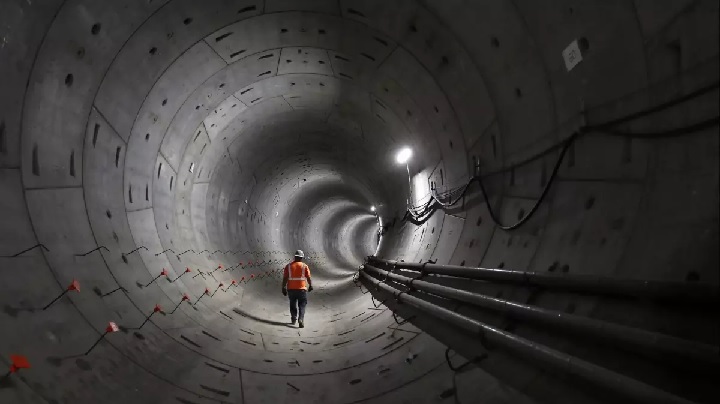
Introduction to the Public–Private Partnership Agreement
This Public–Private Partnership Project Agreement (PPP Agreement) is a long-term contractual framework through which a public authority engages a private party to design, finance, construct, operate, and maintain public infrastructure or services. Unlike traditional public procurement, PPP contracts integrate multiple project phases into a single legal structure and allocate significant risk and performance responsibility to the private sector in exchange for performance-linked remuneration.
PPP agreements are commonly used for infrastructure projects with extended lifecycles, such as transport networks, power generation facilities, water and wastewater systems, social infrastructure, and municipal services. Their complexity reflects the need to align public policy objectives with private sector efficiency, long-term financing, and operational expertise. This article serves as the central reference for PPP-related contract structures, risk allocation models, and project delivery frameworks.
Structure and Scope of the Agreement
A well-drafted PPP Agreement goes far beyond a construction contract. It establishes a comprehensive legal architecture governing the entire project lifecycle, often spanning 20 to 30 years. The agreement typically addresses design obligations, financing arrangements, construction milestones, operational standards, maintenance requirements, performance monitoring, and handback conditions.
Unlike generic contract samples, a robust PPP Agreement defines the interaction between public authority obligations and private party responsibilities with precision. It regulates payment mechanisms, availability standards, service levels, termination scenarios, and dispute resolution procedures. Insurance, performance securities, change-in-law protection, and force majeure are addressed in detail to ensure long-term stability.
This integrated scope allows the contract to function as both a delivery instrument and a governance framework, ensuring continuity throughout the project’s operational life.
Why Comprehensive PPP Agreement Templates Are Rare
Fully developed PPP contract templates are rarely available in the public domain. Most real-world PPP agreements remain confidential due to commercial sensitivity, lender requirements, and government policy constraints. Publicly available versions are often heavily redacted or incomplete, limiting their practical value.
A complete PPP Agreement template, drafted with full articles and schedules, provides exceptional value. It enables project sponsors, advisors, and legal teams to work from a realistic contractual baseline rather than assembling fragmented provisions from multiple sources. By incorporating placeholders for project-specific data, such templates allow efficient customization while preserving structural integrity and international best practices.
Risk Allocation Framework in PPP Projects
Risk allocation lies at the core of every PPP Agreement. The fundamental principle is that each risk should be allocated to the party best able to manage, mitigate, or absorb it. Unlike traditional public contracts, PPP arrangements deliberately transfer substantial project risk to the private sector.
Construction risk, including cost overruns and delays, is typically borne by the private party. Design risk and performance risk are also transferred, supported by performance guarantees and liquidated damages mechanisms. Operational and maintenance risks remain with the private party for the duration of the contract, ensuring long-term asset performance.
Certain risks, however, are commonly retained or shared by the public authority. These may include political risk, regulatory change risk, land acquisition risk, and certain force majeure events. Demand risk allocation varies depending on the project structure and revenue model. The PPP Agreement defines these boundaries explicitly to avoid ambiguity over the project’s lifetime.
Financial Structure and Bankability of PPP Agreement
PPP projects are closely tied to project finance structures. In most cases, the private party establishes a special purpose vehicle (SPV) responsible for raising debt and equity to finance the project. Lenders rely heavily on the Public–Private Partnership Agreement as the primary risk-mitigation instrument during construction and operation.
Revenue mechanisms are central to bankability. Some PPPs rely on user-based revenues, such as tolls or tariffs, while others adopt availability-based payments made by the public authority, subject to performance deductions. The contract defines payment formulas, indexation mechanisms, and adjustment triggers with precision.
Termination compensation, step-in rights, and security arrangements are carefully structured to protect lenders. A bankable PPP Agreement therefore balances public interest safeguards with predictable cash flows and enforceable remedies, making long-term financing feasible.
PPP Models and Contractual Variations
PPP is not a single contract model but an umbrella covering multiple structures. Common forms include Build-Operate-Transfer (BOT), Build-Own-Operate (BOO), Design-Build-Finance-Operate-Maintain (DBFOM), and concession agreements. Each model reflects different approaches to ownership, risk allocation, and lifecycle responsibility.
Under BOT arrangements, the private party constructs and operates the asset for a defined period before transferring it back to the public authority. BOO models allow the private party to retain ownership, often raising heightened regulatory and political considerations. DBFOM structures integrate long-term maintenance obligations, strengthening lifecycle performance incentives.
The choice of model depends on policy objectives, financing constraints, regulatory environment, and public risk appetite. A comprehensive PPP Agreement must clearly reflect the selected model to avoid misalignment between contractual obligations and project reality.
PPP Project Lifecycle and Contract Duration
PPP contracts are inherently lifecycle-driven. They regulate the project from initial development through construction, operation, maintenance, and eventual handback or termination. Each phase is governed by distinct contractual regimes, performance criteria, and monitoring mechanisms.
During construction, milestone completion and interface coordination are closely managed. Once operational, service delivery and asset condition become central, supported by key performance indicators and penalty regimes. Toward the end of the contract, handback requirements ensure that assets are returned in a defined condition.
This lifecycle approach distinguishes PPP agreements from traditional contracts and requires a drafting depth that anticipates long-term operational realities rather than short-term delivery concerns.
Common Challenges and Failure Points in PPP Projects
Despite their advantages, PPP projects are not immune to failure. Poor risk allocation, unrealistic demand forecasts, political interference, and inadequate regulatory frameworks frequently undermine project viability. Contracts that lack flexibility to accommodate long-term change often become sources of dispute rather than stability.
Renegotiation risk is a recurring challenge. Where contractual mechanisms fail to address economic shocks, legal changes, or operational complexity, parties may be forced into prolonged renegotiations. A strong PPP Agreement anticipates these risks by embedding structured variation procedures and transparent dispute resolution mechanisms.
Balanced drafting, rather than aggressive risk transfer, remains the most reliable foundation for sustainable PPP projects.
Practical Application
A comprehensive PPP Agreement template supports a wide range of projects, including cross-border joint ventures, national infrastructure programs, and municipal development initiatives. By providing a consistent contractual baseline, it accelerates negotiations and reduces legal uncertainty.
Such templates also promote disciplined contract administration throughout the project lifecycle. Clear obligations, measurable standards, and defined remedies enable both public authorities and private investors to manage performance proactively rather than reactively.
Final Perspective
Public–Private Partnership Agreements represent one of the most sophisticated forms of infrastructure contracting. Their effectiveness depends on precise risk allocation, bankable financial structures, and disciplined lifecycle governance. A well-structured Agreement is not merely a legal document but a long-term management framework aligning public objectives with private sector capability.
When drafted comprehensively and applied with institutional discipline, Public–Private Partnership (PPP) Agreement can deliver durable infrastructure, improved service quality, and sustainable value for money over decades.
Further Reading on PPP Contract Structures:
- Build-Operate-Transfer (B.O.T)
- Build-Own-Operate (B.O.O) -1
- Build-Own-Operate Agreement (B.O.O) – 2
- Build-Own-Operate-Transfer (B.O.O.T)
- EPCF Contract (Engineering, Procurement, Construction & Finance)
- Sovereign Guarantee
- Partnership Agreement
- Types of Public-Private Partnership Contracts (PPP) – Blog Post
Glossary of Key PPP Terms
- VFM (Value for Money)
- The core justification for PPPs, comparing the project’s cost and quality through private delivery against traditional public procurement to ensure the best outcome for taxpayers.
- Availability Payment
- A payment mechanism where the public authority pays the private partner based on the facility being available and meeting performance standards, rather than usage volume.
- Risk Allocation Matrix
- A detailed contractual framework that assigns specific project risks (political, financial, or technical) to the party best equipped to manage and mitigate them.
- SPV (Special Purpose Vehicle)
- A legal entity created specifically for the project to insulate the parent companies from financial failure and to act as the direct counterparty to the government.
- Viability Gap Funding (VGF)
- A government grant provided to infrastructure projects that are economically justified but not financially viable for the private sector without public support.
References
- World Bank Group – Public–Private Partnerships Reference Guide – This guide provides a comprehensive institutional and contractual overview of Public–Private Partnership Agreement template designed for real infrastructure projects, with full lifecycle coverage and global adaptability. structures, covering risk allocation, financing models, lifecycle management, and government responsibilities in PPP projects.
- IMF – How to Control the Fiscal Costs of Public-Private Partnerships – This note explains why PPP contracts create fiscal risks, how governments should manage contingent liabilities, and what contract and approval controls reduce long-term budget exposure.
- DAU GLOSSARY – Public–Private Partnership (PPP) . …

1
has been added to your cart!
have been added to your cart!

