Estimated reading time: 3 minutes
A “Shareholders Agreement” is a critical document for any business with multiple stakeholders. It establishes rules, responsibilities, and expectations, ensuring clarity and reducing disputes among shareholders. Here’s an in-depth look at its significance and components.

What is a Shareholders Agreement?
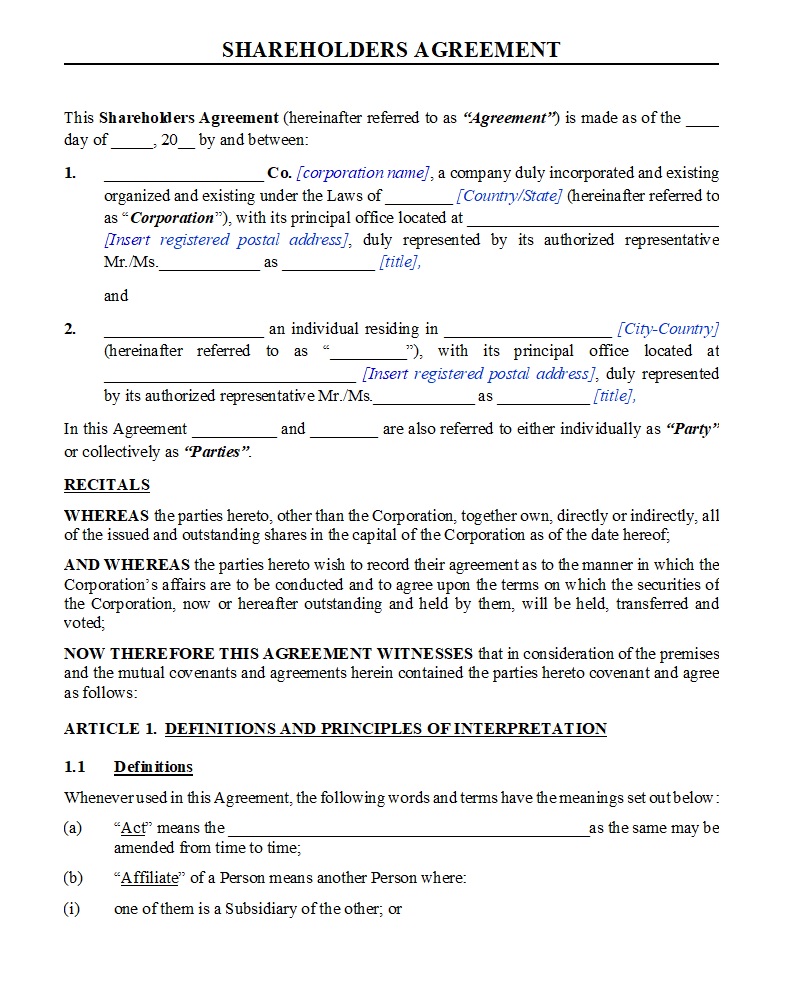
A shareholders’ agreement outlines the rights and obligations of a company’s shareholders. It specifies how the company operates and resolves issues. The document provides a framework for decision-making, share transfers, and shareholder exits. By defining these aspects, it minimizes misunderstandings and strengthens the relationship among stakeholders.
Components of the Agreement
The agreement typically includes provisions for decision-making, voting rights, and dispute resolution. Shareholders agree on mechanisms to address conflicts and ensure transparency. It also defines how new shares can be issued or transferred. Additionally, the agreement may include clauses about confidentiality and non-competition to safeguard the business’s interests.
Benefits of a Shareholders Agreement
The agreement prevents potential disputes by clarifying roles and responsibilities. It ensures all shareholders have a clear understanding of their rights. Moreover, it protects minority shareholders from being overlooked during significant decisions. It also provides a structured approach to exit strategies, ensuring fairness and minimizing disruptions.
Why Every Business Needs One
Even small businesses benefit from having a shareholders’ agreement. It promotes stability and protects investments. As businesses grow, having clear guidelines becomes even more essential. This agreement fosters trust among shareholders and aligns their objectives with the company’s goals. Without one, disputes may arise, risking the business’s future.
Such an agreement is indispensable for a well-structured and harmonious business environment. Every company should prioritize drafting one to avoid complications and maintain smooth operations.
Final Note
A Shareholders Agreement provides stability for a growing business. It prevents small disagreements from turning into legal battles that could destroy the company’s value.
Check out more pages of our website for related content:
Access the Full Contract Directory
You can browse the complete alphabetical list of all commercial, financial, and project-based contract templates by visiting our A–Z Contract Index.
Glossary of Shareholder Terms
- Equity
- The value of the shares issued by a company, representing ownership interest.
- Dilution
- A reduction in the ownership percentage of existing shareholders when the company issues new shares.
- Deadlock
- A situation where shareholders cannot agree on a decision, often requiring a pre-defined “tie-breaker” or “buy-sell” resolution.
- Vesting
- A process where shareholders (often founders) earn their full rights to shares over time, rather than all at once.
- Dividend
- A distribution of a portion of the company’s earnings to its shareholders, usually in cash or additional stock.
- Bad Leaver
- A shareholder who leaves the company under negative circumstances (like fraud), often forced to sell their shares at a discount.
References
- Investopedia – Shareholders’ Agreement: Key Sections and Example Explained – This article describes a shareholders’ agreement as a contract that outlines the rights and responsibilities of company shareholders and details how the company should be operated.
- Corporate Finance Institute – Shareholders’ Agreement – Overview, How It Works, Characteristics – The resource provides an overview of shareholders’ agreements, explaining their role in defining shareholder rights, obligations, and business operations.
- Bird & Bird – What is a Shareholders’ Agreement? – This piece explains a shareholders’ agreement as a commercial contract governing relationships among shareholders and between them and the company. …

has been added to your cart!
have been added to your cart!

