Estimated reading time: 3 minutes
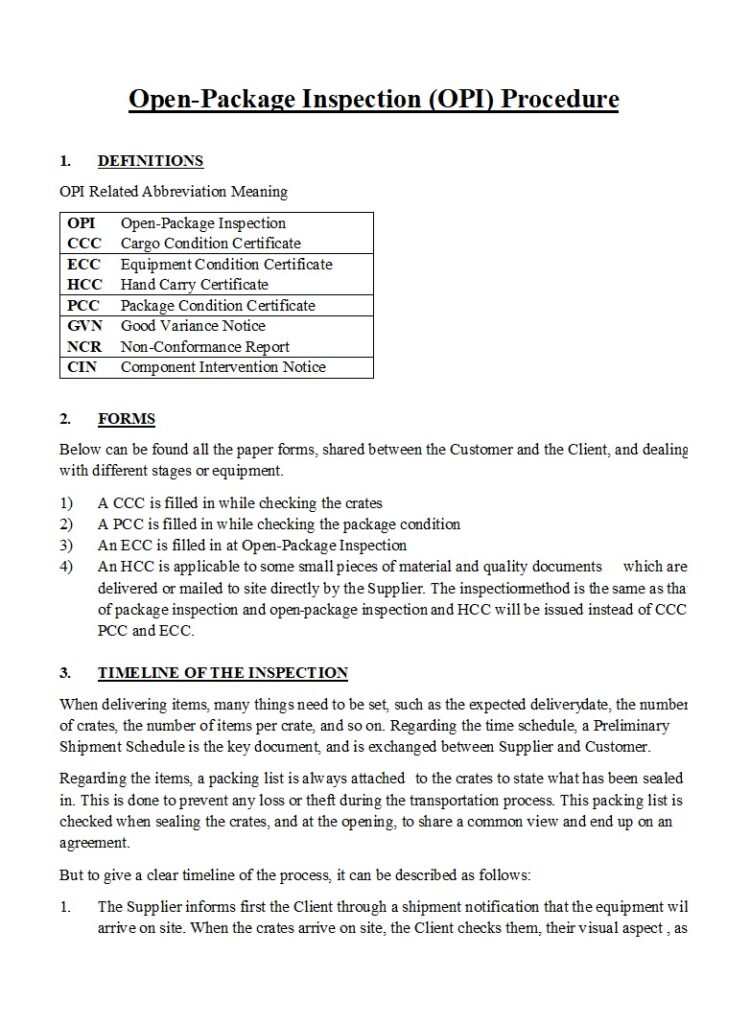
Open-Package Inspection Procedure (OPI) serves as a direct quality control method. It requires inspectors to open packaged goods and examine contents physically. Therefore, teams detect defects or deterioration hidden from external checks. Moreover, OPI confirms compliance with regulatory rules and Good Manufacturing Practices.
OPI usually follows Closed-Package Inspection (CPI). First, CPI reviews packaging condition and pest indicators. Then, OPI verifies the actual product condition. As a result, inspectors gain a complete quality picture. Consequently, organizations reduce inspection gaps.
Purpose and Scope of Open-Package Inspection Procedure
The main objective of OPI focuses on identifying internal defects early. Specifically, it protects product quality, safety, and usability. Additionally, Open-Package Inspection supports compliance with purchasing agreements. Therefore, companies reduce acceptance of defective goods. Ultimately, effective OPI lowers costs, improves product consistency, and increases customer satisfaction.

“Package inspection is the cornerstone of efficient logistics, ensuring every product reaches its destination in perfect condition.”
When OPI is Conducted
OPI is conducted in various situations, including:
- Warranty Inspections: To verify the quality of products during the warranty period.
- Maximum Shelf Life: When products reach their maximum shelf life to ensure they are still fit for consumption or use.
- Customer Request: At the request of the customer, verify the quality of the products.
- Isolated Lots: For lots with an unknown storage history or with no record of inspection.
- Inspector’s Discretion: Based on the findings of the inspector, OPI may be conducted to investigate any suspicions of defects or deterioration further.
Procedure
The OPI procedure typically involves opening the package and inspecting the contents for any signs of defects or deterioration. This may include checking for spoilage, contamination, or damage to the product. The inspection may also involve testing the product to ensure it meets the required standards.
Classification of Defects
Defects found during OPI are classified into two categories:
- Critical Defects: Defects that make the product unfit for its intended use or unfit for human consumption.
- Minor Defects: Defects that do not affect the usability or safety of the product but may impact its quality or appearance.
Check out more pages of our website for related content:
- Packing List (P/L) – 2
- Industrial Inspection Methods and Standards
- Inspection Request Form (IRF)
- Inspection Order Form
And also, this post on our Blog will be useful to read:
Access the Full Contract Directory Index
You can browse the complete alphabetical list of all commercial, financial, and project-based contract templates by visiting our A–Z Contract Index.
References
- Scribd – Opi Format – This technical template provides an inspection report structure for recording damage, rust, or quantity discrepancies found specifically upon opening material packages during equipment erection activities…

has been added to your cart!
have been added to your cart!

