Estimated reading time: 2 minutes
What Is a Mill Inspection Certificate
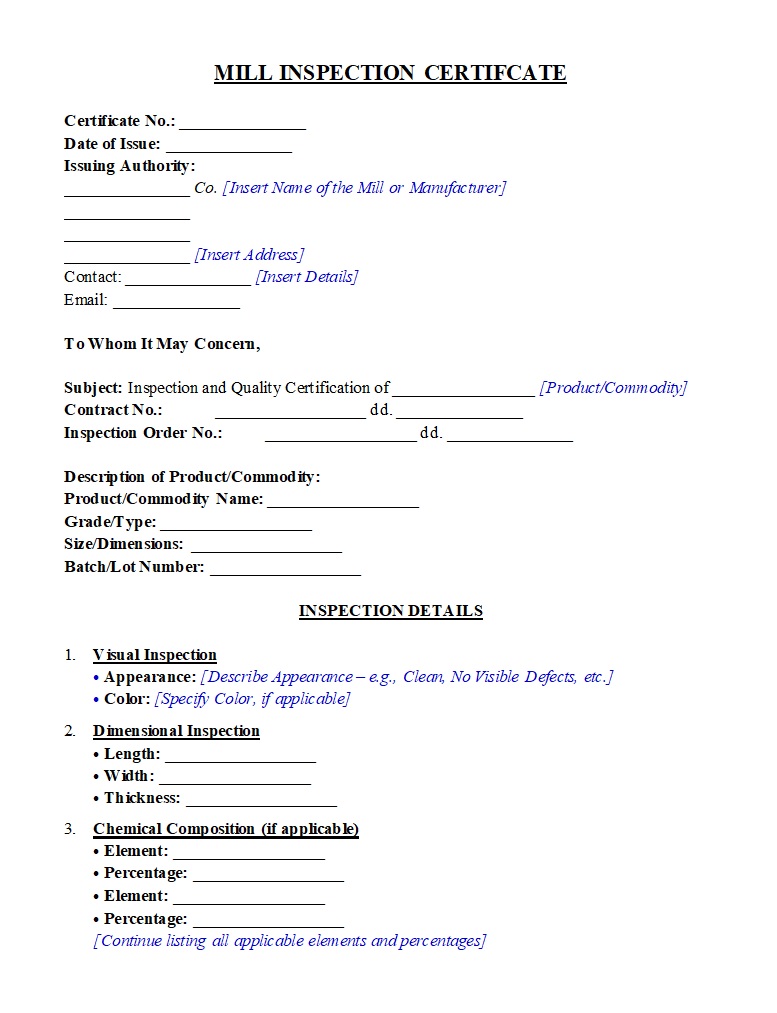
A Mill Inspection Certificate, also known as a Mill Test Certificate, confirms the quality of manufactured materials. It certifies that products meet specified requirements. Moreover, it documents compliance with relevant regulations and industry standards. Manufacturers issue these certificates to reassure buyers about the integrity of materials. Consequently, industries depend on them to reduce risks and guarantee trust in supply chains.

Key Components of a Mill Test Certificate
A mill certificate typically outlines material specifications, composition, and chemical or mechanical properties. It also provides results from laboratory tests. Furthermore, it includes information about applicable standards and codes. Each detail demonstrates whether the material meets contractual requirements. Therefore, the certificate serves as formal proof of compliance and quality.
Importance for Manufacturing and Trade
Manufacturers use Mill Inspection Certificates to establish credibility with clients. Buyers rely on them to verify product safety and performance. Additionally, regulatory authorities often require certificates before approving usage. These documents are particularly vital in industries like construction, oil and gas, and aerospace. As a result, they protect both suppliers and customers against defective or unsafe materials.
Benefits for Businesses and Customers
Using a Mill Test Certificate enhances transparency in manufacturing. Businesses secure confidence in their supply chains. Customers gain assurance that delivered products meet strict quality benchmarks. Moreover, certificates reduce disputes regarding specifications and performance. Hence, they build stronger business relationships and promote accountability in global trade.
Check out more pages of our website for related content:
Access the Full Contract Directory Index
You can browse the complete alphabetical list of all commercial, financial, and project-based contract templates by visiting our A–Z Contract Index.
References
- 1. Xometry – What is a Mill Test Report (MTR)? – This article explains the certificate’s role as a quality assurance document that verifies a material’s physical and chemical properties relative to international standards.
- 2. Metal Supermarkets – What is a Mill Test Report? – This resource highlights the importance of the document in ensuring traceability and confirming that metal products meet specific mechanical and technical specifications before use in construction or manufacturing.
- 3. Tapered Plus – The Importance of Mill Test Certificates in Construction – This piece focuses on how these certificates act as a critical safety check, providing a legal record that the materials used in large-scale projects can withstand the required loads and environmental stresses…

has been added to your cart!
have been added to your cart!

