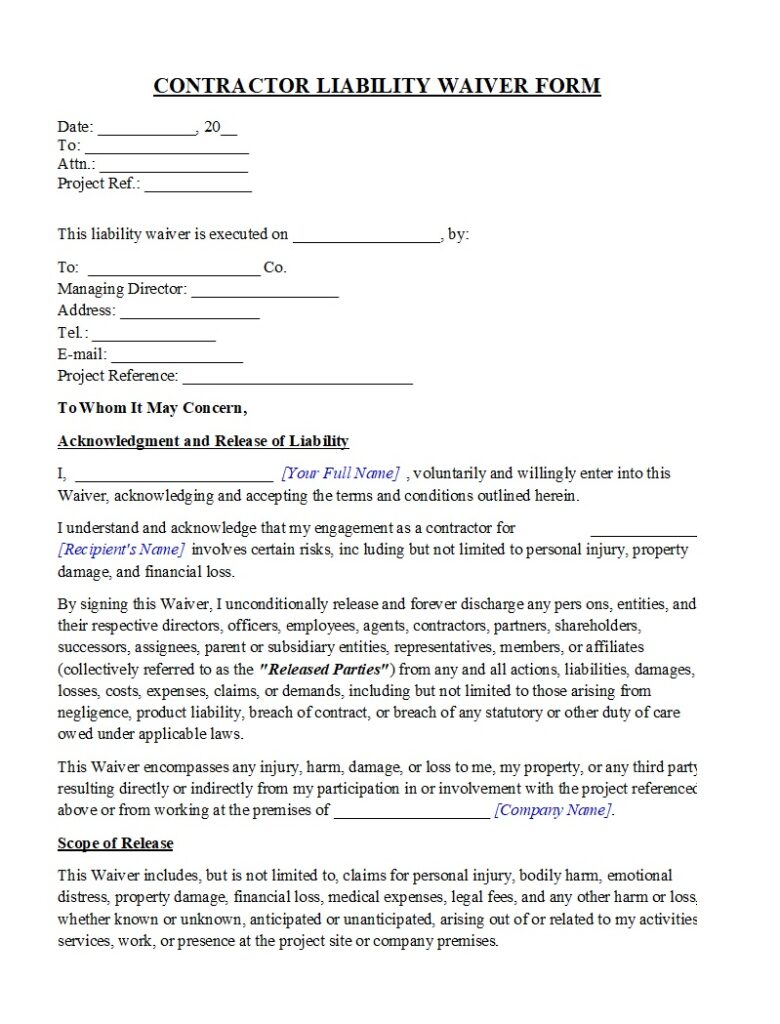
A Contractor Liability Waiver Form is a critical legal document used to protect individuals or organizations that hire contractors for specific services or projects. Its main function is to waive or limit the liability of the hiring party—known as the recipient—against damages, injuries, or losses that might occur as a result of the contractor’s work. In essence, it transfers the responsibility for workplace risks and potential claims from the client to the contractor, ensuring that both parties understand their obligations and the scope of liability before work begins.

Purpose and Legal Relevance
The primary purpose of a Contractor Liability Waiver Form is risk management. It clarifies that the contractor operates as an independent entity and not as an employee of the recipient, thereby excluding the recipient from responsibility for workplace accidents, property damage, or third-party claims. This document is widely used across industries such as construction, maintenance, events, logistics, and creative services—any environment where third-party professionals perform potentially risky tasks.
Legally, the waiver establishes informed consent: the contractor acknowledges the inherent risks of their activities and voluntarily assumes them. In jurisdictions where tort and contract law apply, this waiver serves as evidence that the contractor accepted liability for their own negligence or mishandling of equipment, provided that the hiring party did not act recklessly or intentionally cause harm.
Structure and Key Provisions
A well-drafted Contractor Liability Waiver Form typically includes the following sections:
- Parties Identification: Legal names, addresses, and roles of both the contractor and the hiring entity.
- Assumption of Risk: An explicit statement that the contractor understands and accepts all occupational risks related to the work.
- Waiver and Release of Liability: The contractor agrees not to hold the recipient liable for injuries, losses, or damages resulting from the performance of contracted work.
- Indemnification Clause: The contractor undertakes to indemnify and defend the recipient against third-party claims arising from their actions.
- Insurance Requirements: The contractor may be required to maintain general liability, workers’ compensation, or professional indemnity insurance.
- Governing Law and Dispute Resolution: Identification of the jurisdiction and legal procedures applicable in case of disputes.
- Signature and Acknowledgment: A final section confirming that the contractor has read, understood, and voluntarily agreed to the waiver terms.
Practical Application
This form is particularly valuable in environments with physical, operational, or reputational risks. For instance, construction companies, event organizers, IT consultants, and freelance technicians frequently use it to prevent legal exposure. In large-scale projects, the form can be integrated as part of the contractor onboarding process or appended to the service agreement. Properly executed, it reinforces compliance with occupational health and safety regulations while minimizing disputes and litigation. It is essential, however, that waiver forms comply with national contract and labour laws, as overly broad waivers may be deemed unenforceable in some jurisdictions.
Conclusion
A Contractor Liability Waiver Form is not merely a legal safeguard—it reflects professional diligence and risk awareness. By clearly defining responsibilities and establishing mutual understanding, it ensures that both parties can proceed with confidence and transparency. When properly drafted and supported by insurance and safety measures, it becomes an effective tool for balancing freedom of contract with the principle of accountability in modern business practice.
Read More: Waiver of Liability Agreement
References
- International Labour Organization (ILO) – Occupational Safety and Health Guidelines:
- U.S. Small Business Administration (SBA) – Independent Contractor Agreements and Liability Guidance:
- American Bar Association (ABA) – Best Practices in Risk Allocation and Waiver Enforcement:
- International Risk Management Institute (IRMI) – Indemnification and Hold Harmless Agreements
Related Topics
#ContractorLiabilityWaiver #RiskManagement #LegalCompliance #IndependentContractor #Indemnification #OccupationalSafety #BusinessContracts #ContractLaw #WaiverForm #ContractDirectory
has been added to your cart!
have been added to your cart!


