Estimated reading time: 3 minutes
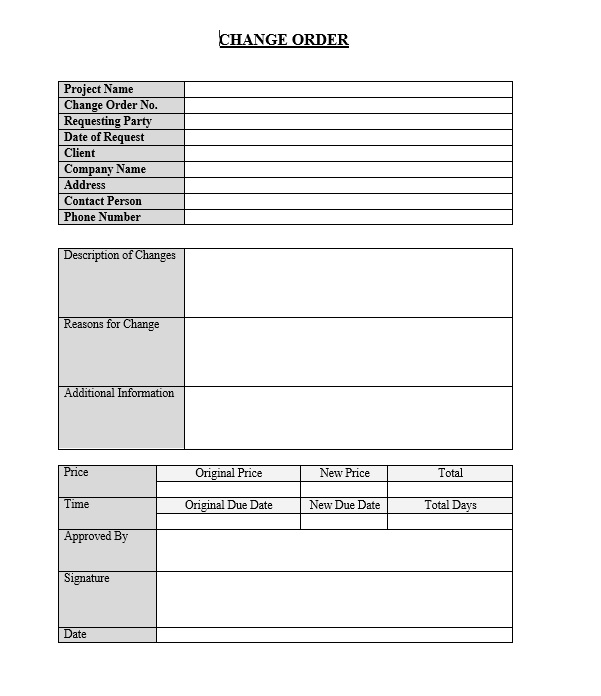
Work / Supply / Service Change Orders are formal contractual instruments used to regulate modifications to an agreed scope of work. They apply across construction, engineering, and service contracts where project conditions evolve. Instead of informal instructions or verbal requests, a Work Change Order documents adjustments clearly and protects contractual balance. As a result, all parties maintain clarity and accountability throughout execution.

Purpose and Function of a Change Order
The primary purpose of a Work Change Order is to record deviations from the original contract scope. These deviations may involve additional work, omitted tasks, revised specifications, or schedule adjustments. Therefore, the document confirms mutual agreement before implementation. Moreover, it prevents scope creep and preserves the legal integrity of the original contract.
Core Components
A typical Work Change Order identifies the original contract reference, describes the change in detail, and explains the reason for adjustment. Additionally, it sets out revised pricing, time impacts, and payment terms. Most importantly, authorized signatures validate the change. Consequently, the modification becomes enforceable without reopening the entire agreement.
Practical Use and Application
In practice, the Orders allow projects to adapt without disruption. For example, unforeseen site conditions or regulatory updates often require immediate scope changes. Through a structured approval process, parties avoid disputes and uncontrolled cost growth. Therefore, project momentum continues while financial exposure stays measurable.
Common Challenges and Mistakes
Disputes often arise when parties proceed without a signed Order. Similarly, vague descriptions create interpretation risks. To avoid this, contracts should mandate written approval before execution. Ultimately, disciplined use of the Orders strengthens trust, cost control, and project governance.
Final Note
The Orders transform inevitable project changes into controlled contractual actions. When drafted and applied correctly, they protect timelines, budgets, and professional relationships without undermining the original agreement.
Check out more pages of our website for related content:
- Change Order (Simple Form) – 1
- Change order (for Cost-Plus Contracts)
- Purchase Order (For Project) – 1
Reference:
- Bauwise – How To Improve Change Order Management in 2025 – This guide examines the essential 2025 practices for managing contract modifications, emphasizing the importance of written documentation and data-driven risk assessment to prevent budget overruns.
- Building.co.uk – CPD 25 2025: Mastering contract modifications – This professional development article provides a technical breakdown of how variations and scope changes are handled under major 2025 contract frameworks like FIDIC, NEC, and JCT.
- Apps365 – Contract Change Management Explained | Complete Guide 2025 – This comprehensive resource outlines the operational steps for implementing change orders in service and supply contracts, focusing on centralized record-keeping and automated approval workflows. …


