Estimated reading time: 2 minutes
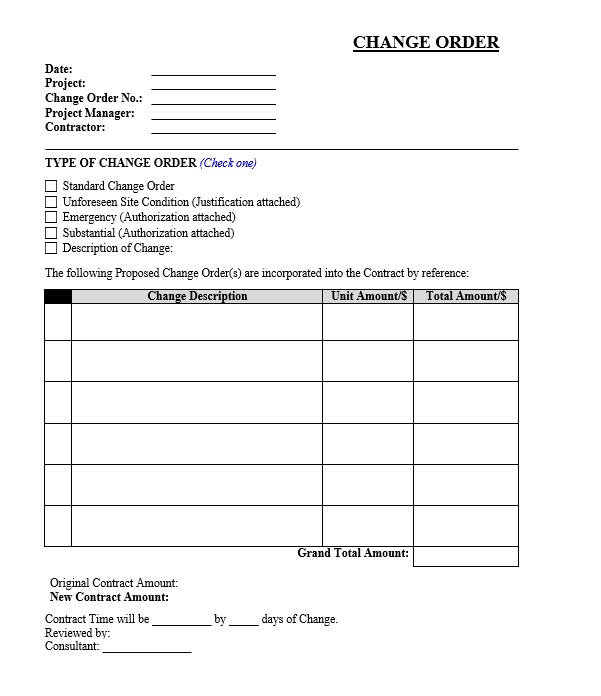
A Change Order (For Project) introduces an authorized adjustment to the original project agreement, covering revisions to scope, specifications, design requirements, timelines, or cost. It ensures that any modification occurs formally, with written confirmation, structured documentation, and clear approval from both parties. Because it links directly to the underlying contract, it maintains contractual integrity and prevents disputes over obligations or expectations.
How a Change Order Operates
A Change Order follows the procedures set out in the respective contract with the contractor, which define the request method, submission requirements, pricing rules, schedule impact analysis, and verification steps. The contractor provides details such as cost breakdowns, resource allocations, and updated delivery milestones. Consequently, the issuing party evaluates technical feasibility, commercial effect, and operational influence before approving or rejecting the proposal. Each approved Change Order updates the project’s official records and becomes part of the binding contractual documents.
Why Projects Depend on Change Orders
Projects rely on Change Orders to manage evolving conditions, unexpected site realities, design refinements, and stakeholder requirements. This structured approach keeps every adjustment under commercial and technical control. It also reinforces accountability by ensuring that cost impacts, schedule shifts, and performance changes remain documented and quantified. Through this process, both the owner and the contractor safeguard clarity while maintaining alignment with the project’s objectives and delivery strategy.
Relationship to the Governing Contract
A Change Order only functions correctly when tied to the terms of the original contract, which establishes the rules for valuation, entitlement, risk allocation, and approval authority. The contract sets out the clauses governing variations, time extensions, payments, documentation standards, and dispute management. Therefore, every Change Order (For Project) must comply with these clauses so the modification integrates seamlessly into the project’s legal and commercial framework. This direct linkage ensures that no change overrides the contract’s structure and that both parties operate under the same binding process.
Check out more pages of our website for related content:
- Change Order (Simple Form) – 1
- Change order (for Cost-Plus Contracts)
- Purchase Order (For Project)
- Contract Amendment – ver. 3
Access the Full Contract Directory Index
You can browse the complete alphabetical list of all commercial, financial, and project-based contract templates by visiting our A–Z Contract Index.
Reference:
- World Trade Organization – Government Procurement Agreement (Project Variation Practices)
- European Commission – Construction Procurement and Contract Modification Guidance
- World Economic Forum – Infrastructure and Project Management Insights
- International Monetary Fund – Public Investment Management Framework

has been added to your cart!
have been added to your cart!

