Estimated reading time: 3 minutes
A Business Plan defines how a company positions its offerings, prepares its strategy, and organizes future growth. This document explains what a Plan includes, how it shapes direction, and why companies rely on it for structured planning. The definition of a Plan varies across industries, yet its purpose remains consistent in guiding decisions and clarifying practical objectives.
Purpose and Function of Business Plan
The Business Plan creates a structured guide that outlines product intentions and service requirements. It supports clarity around market needs and helps decision-makers understand how different activities align with broader goals. Moreover, it explains what a Plan does, how it improves planning quality, and why it brings coherence to strategic and operational steps across a company’s workflow.

Core Structure of a Business Plan
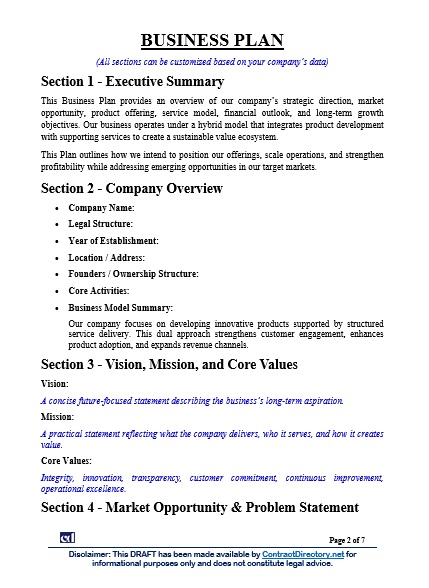
A Plan follows an organized layout that presents essential sections in a logical order. It starts with an executive summary and company overview before moving into vision, mission, and market focus. Afterwards, it describes product offerings, followed by service activities that support those products. This structure improves documentation requirements, clarifies obligations of teams, and aligns processes with the commercial context. It also supports the interpretation of financial plans and operational expectations.
Practical Use and Application
The Plan serves as a practical tool that guides actions across different phases of a company’s development. Companies rely on it to outline their product roadmap, define service delivery, and explain the steps that support implementation. Additionally, it helps align internal teams, improves market communication, and supports discussions with partners or investors. This approach creates real-world relevance and strengthens execution across daily operations.
Common Mistakes and Considerations
Many businesses prepare a Plan without sufficient market insight, which creates unclear direction. Others overlook operational needs or present financial expectations without realistic assumptions. Another issue appears when product and service strategies are not aligned with market behavior. Missing sections or weak documentation also reduce impact. Addressing these concerns improves clarity and supports consistent planning outcomes.
Last Word
A well-structured Plan improves understanding, supports clarity, and strengthens coordinated action across the company. It creates practical value and ensures consistent planning results.
Check out more pages of our website for related content:
Reference:
- UWGB SBDC – Is Writing a Business Plan Still of Value? – This article explores the ongoing value of writing a business plan, supported by data showing it doubles success in growth and financing for entrepreneurs.
- SBA – An Effective Business Plan Can Plot the Course for Small Business Success – The article discusses how a well-crafted business plan guides small businesses toward success and introduces a course on writing one.
- U.S. Chamber of Commerce – Writing a Business Plan? Here’s How to Do It, Section by Section – This piece provides a step-by-step guide to the nine essential sections of a strong business plan along with best practices.

has been added to your cart!
have been added to your cart!

