Estimated reading time: 2 minutes
Overview
Technical know-how transfer is the systematic process of moving knowledge, expertise, and intellectual property from creators, often universities and research institutions, to users and industry to develop new products, services, and processes that benefit society and the economy. This transfer involves various activities, including licensing, contract research, the formation of spin-off companies, patenting inventions, and public outreach to facilitate the commercialization and practical application of scientific findings.

The Agreement
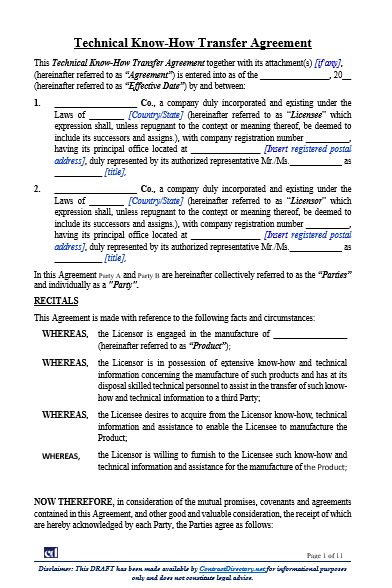
A Technical Know-How Transfer Agreement governs the sharing of specialized knowledge between parties. It defines clear rules for gaining from confidential technical information. Moreover, it ensures both parties gain benefits without losing control over intellectual property. Therefore, it protects innovation while enabling growth through structured knowledge exchange.
Structure of Agreement
The agreement usually includes scope, obligations, confidentiality, and licensing conditions. Additionally, it outlines payment terms, warranties, and dispute settlement procedures. Each clause ensures the provider delivers know-how with measurable outcomes. Consequently, the recipient obtains access to valuable expertise that enhances business capacity and competitiveness.
Advantages for Businesses
Businesses use such agreements to secure knowledge while reducing development costs. Furthermore, they promote international collaboration and improve technological advancement. Companies gain faster market entry with expert technical guidance. Therefore, these agreements create sustainable opportunities and strengthen trust between cooperating entities.
Best Practices for Drafting
Clarity ensures both parties understand responsibilities. Additionally, businesses should define limitations on usage and safeguard against unauthorized disclosure. Legal advisors help align agreements with local regulations and international standards. Hence, proper drafting supports smooth cooperation, reduces risks, and enhances long-term business relationships.
Check out more pages of our website for related content:
References
- World Intellectual Property Organization (WIPO)
- Harvard Law School – Program on Negotiation
- Cornell Law School – Legal Information Institute

has been added to your cart!
have been added to your cart!

