Estimated reading time: 3 minutes
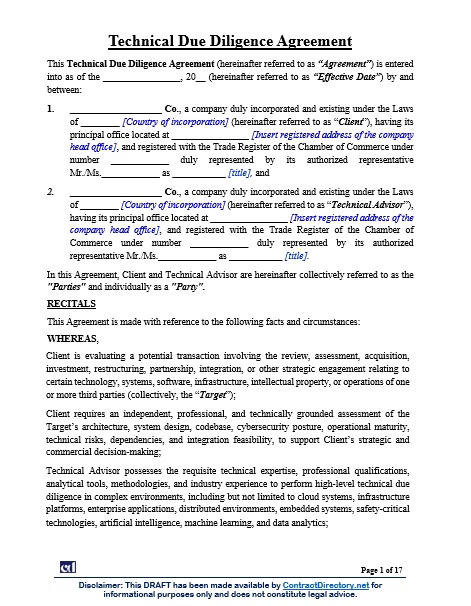
A Technical Due Diligence Agreement outlines evaluation protocols for technology assets. Advisors examine systems under defined terms. Parties establish boundaries for access and analysis.

Contractual Relevance of Technical Due Diligence Agreement
Advisors conduct reviews through Technical Due Diligence Agreements. Clients secure insights into target systems. Moreover, agreements specify the scope for software and infrastructure assessments. Parties include clauses on data handling and confidentiality. Therefore, Technical Due Diligence Agreements enable structured evaluations. Furthermore, they integrate protections from related frameworks like a Non-Disclosure Agreement (NDA). Consequently, advisors operate within clear contractual limits.
Legal Implications in Technical Assessments
Laws govern Technical Due Diligence Agreements in mergers and acquisitions. Disputes emerge from unauthorized data access. Consequently, advisors face liability for breaches. Clients enforce compliance with IP statutes. However, regulations like trade secret laws dictate validity. Thus, agreements align with antitrust requirements. Additionally, international standards affect cross-border reviews. Structures often reference an Intellectual Property Rights Agreement for IP safeguards.
Risk Exposure from Flawed Technical Agreements
Parties encounter losses in weak Technical Due Diligence Agreements. Vague terms trigger litigation over findings. Moreover, advisors incur penalties for non-adherence. Clients risk data leaks from lax controls. Therefore, incomplete scopes expose systems to misuse.
Furthermore, regulatory violations heighten scrutiny. Consequently, Technical DDAs require robust language to curb threats. Risks amplify without precise Consultancy Agreement elements in advisor roles.
Transactional Role and Drafting Importance
Technical Due Diligence Agreements support transactions in tech-driven deals. They facilitate asset valuation in acquisitions. Moreover, parties depend on these for informed decisions. However, poor drafting allows misinterpretations of reports.
Therefore, drafters incorporate metrics for cybersecurity checks. Additionally, agreements handle termination and dispute scenarios. Thus, a strong Technical Due Diligence Agreement safeguards interests in volatile markets. Proper terms avert enforcement issues in regulatory contexts.
Differences Between General and Technical Due Diligence Agreements
Due Diligence Agreements (DDAs) generally encompass broad evaluations in mergers, acquisitions, or investments, covering financial statements, legal compliance, operational efficiency, market position, and human resources to assess overall viability and risks. In contrast, Technical Due Diligence Agreements focus exclusively on technology-specific aspects, such as software architecture, cybersecurity protocols, infrastructure scalability, intellectual property integrity, and system integration, isolating these elements to mitigate unique digital vulnerabilities that broader DDAs overlook.
Consequently, while standard DDAs provide a holistic transactional overview, Technical DDAs demand specialized clauses for data access, IP protection, and liability limitations tailored to volatile tech environments, ensuring precise risk management in innovation-driven deals.
Check out Know Your Customer (KYC) and its Form as a useful document, in same concern.
Access the Full Contract Directory Index.
You can browse the complete alphabetical list of all commercial, financial, and project-based contract templates by visiting our A–Z Contract Index.
References
- Investopedia – Due Diligence: Types and How to Perform
- Federal Reserve – Conducting Due Diligence on Financial Technology Companies. This source details due diligence processes for fintech relationships in banking.
- Santa Clara University School of Law – Due Diligence and the High-Technology Client. This examines legal counseling in technology due diligence contexts.
- Yale University – Due Diligence Assessment. This outlines assessments for data partnerships in research environments..

has been added to your cart!
have been added to your cart!

