
Estimated reading time: 4 minutes
The Foundation of Secure Financial Communication
In modern banking, clarity and standardization define reliability. The SWIFT Message Glossary serves as the global reference that ensures financial communication remains uniform and secure. It defines the structures, fields, and codes used across the Society for Worldwide Interbank Financial Telecommunication (SWIFT) network, providing the foundation for how financial institutions transmit payment orders, Letters of Credit, guarantees, and other trade-related instructions with precision and consistency.
Through the SWIFT infrastructure, more than eleven thousand institutions across two hundred countries exchange authenticated messages daily. This system supports every major aspect of international trade finance, ensuring that transactions governed by UCP 600, URR 725, and URDG 758 are executed safely within a trusted framework.
What the SWIFT Message Glossary Contains
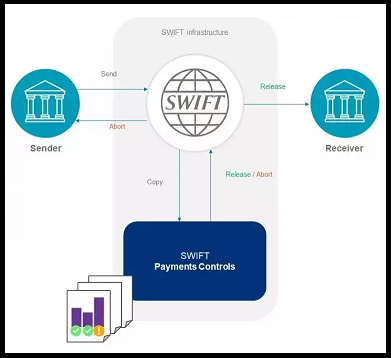
The SWIFT Message Glossary catalogues all standardized message types, explaining their purpose, scope, and usage. Each entry outlines message fields, validation rules, mandatory and optional data elements, and examples of correct formatting. It also sets forth authentication and transmission requirements to guarantee that each instruction is recognized and processed without ambiguity.
Messages such as MT700 for issuing a Letter of Credit, MT707 for amendments, MT760 for guarantees, and MT742 for reimbursement claims follow precisely defined structures. These formats ensure that all participating banks interpret financial instructions in the same way, regardless of location or system. The glossary’s role is to prevent misinterpretation, reduce manual errors, and support automation across the global financial system.
Relationship Between SWIFT and UCP 600
While UCP 600 governs the legal content of documentary credits, SWIFT governs their communication and execution. UCP 600 defines the principles of availability, presentation, and document compliance; SWIFT determines how those principles are expressed and transmitted. For instance, Article 6 of UCP 600 requires that credits state where and by whom they are available—a detail transmitted through Field 41A of an MT700 message. Similarly, document acceptance or refusal under Article 14 is conveyed through specific SWIFT messages such as MT732 or MT734.
This close relationship between UCP and SWIFT ensures that a credit issued in one jurisdiction can be confirmed, amended, and reimbursed accurately in another. If the SWIFT message is incorrectly coded, even a legally sound LC may fail operationally, delaying payment or causing discrepancies.
Why the SWIFT Message Glossary Matters
The glossary promotes accuracy, uniformity, and compliance across the financial system. It eliminates regional interpretation differences, enabling banks to process transactions swiftly and securely. It also supports regulatory obligations related to AML, KYC, and sanctions screening, ensuring that messages remain traceable and verifiable. By maintaining a standard language for instructions, the glossary helps banks automate validation, minimize risk, and improve settlement speed.
Professionals involved in trade finance, treasury, and compliance rely on this glossary as much as on ICC rulebooks. Understanding its message logic enables them to detect formatting errors, verify field data, and ensure alignment with contractual obligations. When integrated with ICC frameworks, the glossary becomes an indispensable instrument for maintaining integrity across every stage of the trade-finance lifecycle.
Avoiding Common Messaging Errors
Despite its precision, many operational issues stem from a poor understanding of SWIFT formatting rules. Errors such as misidentifying availability, omitting reimbursement instructions, or confusing field tags often lead to rejections or delayed payments. A frequent mistake is mixing up the nominated bank’s authority or incorrectly stating whether the credit is available by sight, acceptance, or negotiation. These inconsistencies can undermine even the strongest legal undertakings under UCP 600.
Another challenge arises when amendments are transmitted without proper reference to the original LC or when incorrect sequence numbers are used. Such issues can lead to duplicate obligations, compliance alerts, or even legal disputes. Regular training and adherence to the glossary’s standards help banks avoid these costly mistakes and maintain smooth trade execution.
The Transition to ISO 20022
The financial industry is now shifting from legacy MT messages to the ISO 20022 data standard. The SWIFT Message Glossary provides essential mapping guidance between these two systems, ensuring message interoperability during this transition. ISO 20022 supports richer data sets, faster reconciliation, and better compliance monitoring. Institutions that understand both SWIFT MT formats and ISO 20022 structures will maintain operational resilience and compatibility in the coming decade.
Conclusion
The SWIFT Message Glossary represents the unifying language of international banking. It ensures that payment instructions, Letters of Credit, and guarantees flow seamlessly through a shared digital standard. For trade-finance professionals, understanding the glossary is as critical as knowing UCP 600 itself—it translates legal obligations into executable instructions that safeguard money, reputation, and trust. In a world where one misplaced code can halt a multimillion-dollar transaction, the glossary remains the invisible infrastructure holding global finance together.
Find more useful and important information:
- Understanding Payment Execution and Negotiation in UCP 600
- Everything About Letter of Credit (Blog Post)
- Deferred Payment Letter of Credit (Usance L/C)
- INCOTERMS 2020
References
- SWIFT – Messaging Standards and Formats
- SWIFT – MT and ISO 20022 Message Catalogue
- International Chamber of Commerce – UCP 600: Uniform Customs and Practice for Documentary Credits
- ICC – URDG 758: Uniform Rules for Demand Guarantees
- ICC – URR 725: Uniform Rules for Bank-to-Bank Reimbursements
- BankOn School – SWIFT MT700 Format and Field Breakdown for Letters of Credit

has been added to your cart!
have been added to your cart!

