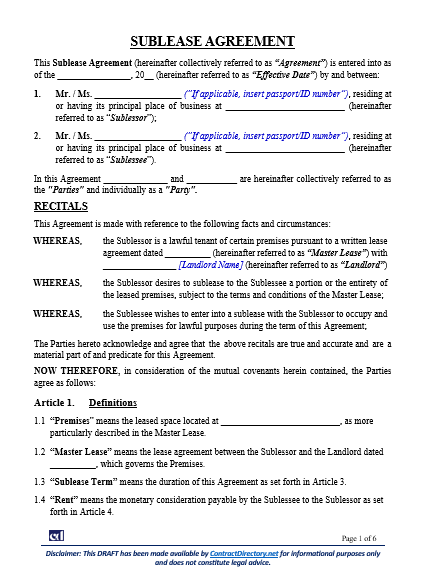
What Is a Sublease Agreement?
A Sublease Agreement is a legal contract where the original tenant (sublessor) rents all or part of their leased premises to another party (sublessee). This arrangement remains subject to the terms of the master lease signed with the landlord. It creates a structured relationship that clearly defines rent, term, permitted use, and obligations.
Why Parties Enter Into Subleases
Often, a tenant may no longer require the entire space or may relocate temporarily. By signing a sublease, the tenant reduces financial burdens while ensuring the property remains in use. For the sublessee, it provides an affordable entry into a leasehold arrangement without negotiating directly with the landlord. This makes subleasing a practical solution in dynamic commercial and residential property markets.
Key Clauses That Protect Both Sides
The agreement includes critical provisions covering rent, security deposits, maintenance, insurance, indemnification, and restrictions on further subletting. Importantly, it binds the sublessee to comply with the master lease obligations. Clauses on default and remedies also provide clarity in the event of disputes. Through these safeguards, both parties reduce risk and uphold fairness.
Legal Considerations When Signing
Since subleases depend on the master lease, landlord consent is usually required. Governing law and dispute resolution clauses ensure that any conflicts are handled systematically. Identification details such as passports or ID numbers may also be included for foreign parties, ensuring enforceability across jurisdictions. Signing a Sublease Agreement, therefore, ensures that rights are legally protected, responsibilities are clear, and the arrangement is enforceable.
References
- Cornell Law School – Sublease
- American Bar Association – Leasing & Subleasing Basics
- Legal Information Institute – Contract Law
Related Topics:
#RealEstateLaw #Sublease #ContractTemplates #LegalAgreements #PropertyLaw
has been added to your cart!
have been added to your cart!


