
Estimated reading time: 4 minutes
A Standby Letter of Credit (SBLC) Application Form is a core document in international banking and trade finance. It enables an applicant to formally request a bank to issue a standby letter of credit that guarantees performance or payment. Because global trade involves distance, risk, and trust, an SBLC serves as a powerful financial safeguard between business partners.
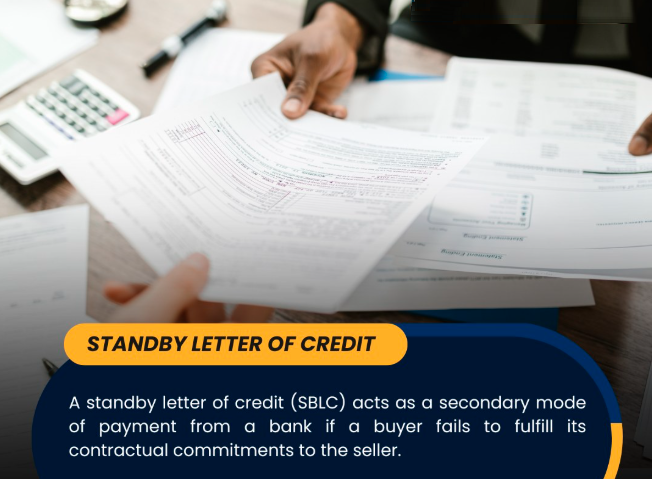
Purpose and Function of SBLC
A Standby Letter of Credit acts as a bank guarantee designed to protect both sides of a transaction. The beneficiary gains assurance that the bank will pay if the applicant fails to meet contractual terms. At the same time, the applicant benefits from the credibility and financial backing of a recognised bank. Consequently, an SBLC reduces default risk and strengthens commercial confidence.
Through this application, the issuing bank reviews the applicant’s creditworthiness, transaction purpose, and compliance with financial regulations. Once approved, the SBLC functions as a formal commitment governed by international rules such as UCP 600 or ISP 98. These standards ensure fairness, consistency, and transparency in global dealings.
Main Components of the Application Form
The Standby Letter of Credit application form is structured to capture essential information, ensuring legal accuracy and operational clarity:
- Applicant Details: Includes the applicant’s legal name, business address, registration number, and supporting documents such as articles of incorporation or identification. This establishes the applicant’s credibility and compliance with Know-Your-Customer (KYC) regulations.
- Beneficiary Details: Specifies the name, address, and contact information of the party to whom the SBLC will be issued, confirming who will receive the guarantee in case of default.
- SBLC Particulars: Defines the requested amount, currency, expiry date, and the underlying purpose (e.g., performance guarantee, payment security, or trade assurance). These details determine the financial exposure and operational scope of the instrument.
- Terms and Conditions: Covers specific clauses such as required documents for drawing, expiry rules, and governing law. These conditions protect both the applicant and the bank from ambiguity.
- Authorized Signatory: Represents the applicant’s formal acceptance of the terms, usually signed by an authorized officer empowered to enter into financial obligations.
SBLC and Bank Guarantee: A Close Relationship
Although both instruments serve as financial guarantees, their legal frameworks differ. A Bank Guarantee (BG) represents a direct promise by the bank to pay the beneficiary upon default. In contrast, an SBLC is issued as a type of documentary credit that activates only when the applicant fails to perform. Hence, every SBLC operates as a form of bank guarantee, yet not every guarantee qualifies as an SBLC. This distinction matters in international trade, where regulatory and procedural standards vary.
Accuracy, Compliance, and Practical Impact
Because the SBLC involves multiple parties and strict documentation, accuracy is crucial. Even minor errors can delay approval or breach compliance requirements. Therefore, applicants should ensure that every field, amount, and date matches the supporting contract. Moreover, they must verify that all terms align with the intended transaction, since the SBLC represents a binding obligation once issued.
Conclusion
An SBLC Application Form is more than an administrative request, it is the foundation of financial security in global business. It combines the strength of a bank guarantee with the structure of international credit law. By completing it carefully and transparently, applicants build trust, reduce risk, and secure lasting relationships in the world of trade and finance.
For further reference, you may review the following related templates:
- Standby Letter of Credit (SBLC)
- Payment Bank Guarantee (BG)
- Uniform Customs and Practice for Documentary Credits (UCP600)
- KYC Application Form
1
Reference:
- Investopedia – Standby Letter of Credit (SLOC): Definition, Benefits, and Process – The article defines a standby letter of credit as a bank’s guarantee of payment to a third party if its client fails to fulfill a contractual obligation, while covering its benefits and operational process.
- Corporate Finance Institute – Standby Letter of Credit (SBLC) – Overview, How It Works, Types – This resource provides an overview of a standby letter of credit as a legal document where a bank guarantees payment of a specific amount to a seller if the buyer defaults, including its mechanics and variations…

has been added to your cart!
have been added to your cart!

