Estimated reading time: 3 minutes
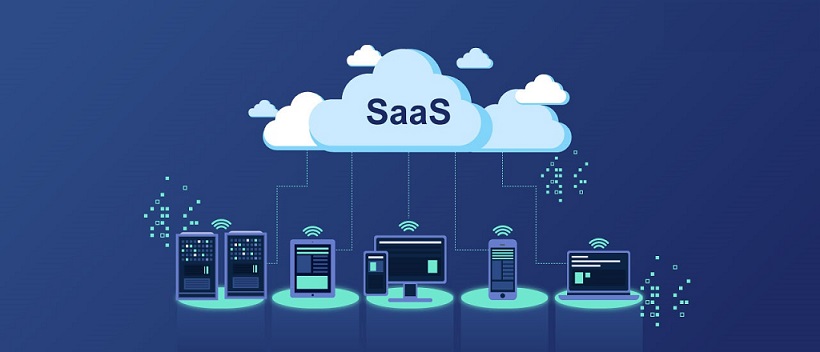
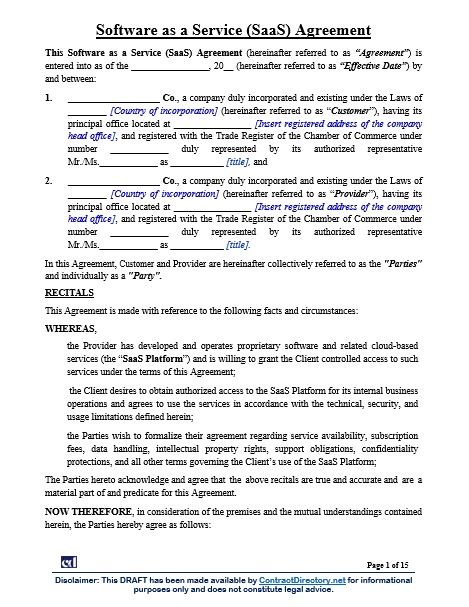
A Software as a Service (SaaS) Agreement governs the relationship between a service provider and a customer who accesses cloud-based software through subscription. Because SaaS platforms store data, run critical operations, and integrate with business workflows, the agreement establishes clear terms that guide how both parties use, support, manage, and secure the service. Consequently, this contract sets boundaries, clarifies responsibilities, and ensures that the software environment operates smoothly.
Access Rights, Usage Rules, and Performance Obligations in Software as a Service Agreement
A strong cloud-service agreement explains how the customer gains access to the platform and under which conditions the provider maintains service availability. Therefore, the agreement addresses subscription tiers, user limits, licensing rules, permitted activities, and technical requirements for stable performance. Moreover, it outlines uptime commitments, service-level expectations, maintenance windows, feature updates, and the provider’s duty to supply timely support. As a result, both sides work within a predictable and transparent operational framework.
Data Ownership, Security Measures, and Compliance Duties
Since SaaS platforms process data continuously, the agreement defines ownership, storage practices, retention periods, and deletion procedures. In addition, it details encryption standards, backup procedures, incident-response duties, and confidentiality protections. These clauses ensure that customer information stays protected and that the provider follows relevant regulations such as privacy laws, cybersecurity standards, and industry-specific compliance rules. Consequently, the customer gains assurance that its critical information remains secure, while the provider maintains operational integrity.
Intellectual Property, Payment Terms, and Termination Outcomes
The Software as a Service (SaaS) Agreement also clarifies intellectual-property rights by confirming that the provider retains ownership of the software, underlying systems, and platform components. Meanwhile, the customer receives controlled access for internal use only. Furthermore, the agreement explains subscription fees, billing cycles, overdue payments, and upgrade or downgrade procedures. If either party ends the contract, termination clauses guide data export, account closure, and the final responsibilities of both sides. Therefore, the entire lifecycle of the SaaS subscription follows structured and predictable terms.
Final Note
A Business Development and Consultancy Agreement works best when it reflects real commercial practice rather than abstract assumptions. Clear definitions, measurable compensation triggers, and enforceable protections reduce dependency on personal trust and prevent disputes as relationships evolve. When drafted with precision, this agreement becomes a practical tool for growth, alignment, and long-term cooperation—not just a formality.
Check out more pages of our website for related content:
- End-User License Agreement (EULA)
- Artificial Intelligence (AI) Service Agreement
- Technology Service Agreement (TSA)
- AI Data-Sharing Agreement for Open AI Model Development
- AI & Digital Transformation Consulting Agreement
And many more in our Artificial Intelligence (AI) page
Access the Full Contract Directory Index
You can browse the complete alphabetical list of all commercial, financial, and project-based contract templates by visiting our A–Z Contract Index.
References:
- IBM – What Is Software as a Service (SaaS)? – This comprehensive guide explains the core architecture of SaaS, including multitenancy and cloud hosting, while highlighting modern shifts toward “Vertical SaaS” designed for specific industries like healthcare and construction.
- Microsoft Azure – What is Software as a Service (SaaS)? – This resource outlines the technical and financial benefits of the SaaS model, focusing on how subscription-based pricing and centralized management allow businesses to scale resources dynamically without local hardware.
- Salesforce – AI and the SaaS Industry in 2026 – This industry analysis explores the evolution of SaaS from traditional cloud apps to “AI-Native” platforms, where autonomous agents and usage-based pricing are becoming the new standard for enterprise software…

has been added to your cart!
have been added to your cart!

