Estimated reading time: 3 minutes
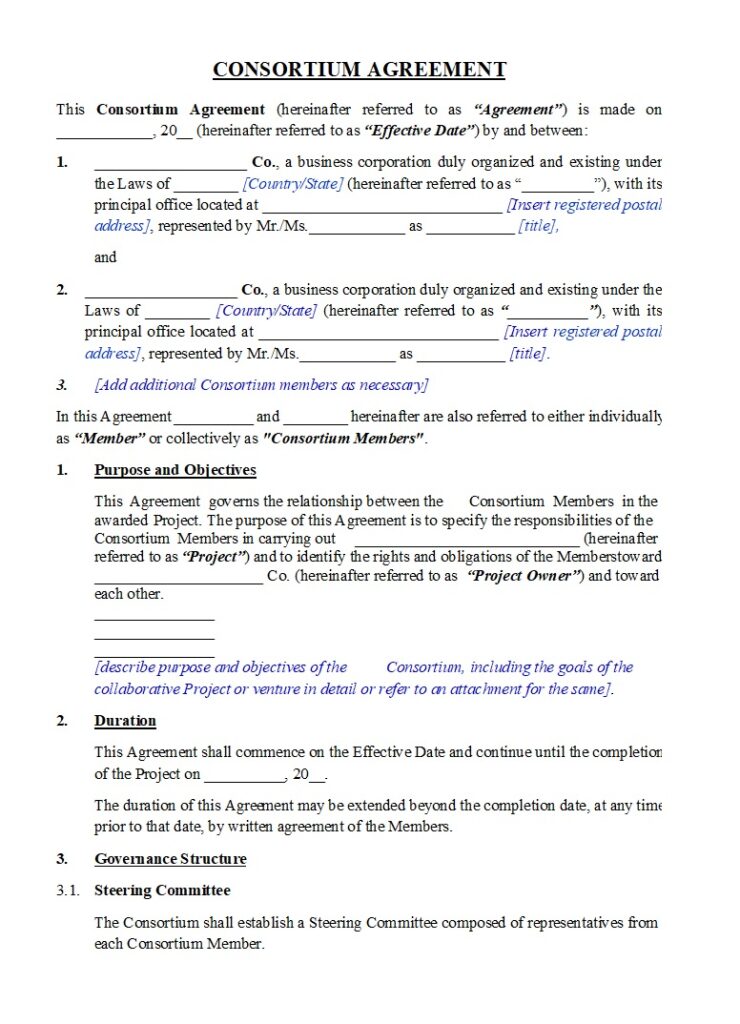
A Project Consortium Agreement defines how multiple parties cooperate to deliver a shared project or venture. It serves as a legal framework for collaboration among organizations that combine expertise, funding, and resources to achieve common objectives. This contract ensures that all consortium members work under clear, coordinated, and transparent conditions.

Definition and Purpose of a Project Consortium Agreement
The purpose of a consortium agreement is to formalize the partnership between independent entities. It outlines how they plan, manage, and execute a joint project while protecting their individual and collective interests. Each party retains its independence but agrees to act together toward a defined goal.
This type of agreement is common in complex undertakings such as infrastructure, energy, research, or technology projects, where no single participant holds all the required capabilities.
Structure and Elements
A well-prepared project consortium agreement includes:
- Purpose and Scope: Defines the project objectives and the nature of the collaboration.
- Roles and Responsibilities: Details what each member contributes in terms of work, funding, or expertise.
- Governance Structure: Establishes the decision-making process and management hierarchy.
- Intellectual Property Rights: Clarifies ownership and use of jointly developed technology or data.
- Financial Management: Describes cost-sharing, payments, and accounting methods.
- Compliance and Risk Management: Ensures adherence to laws, safety standards, and project regulations.
- Dispute Resolution: Provides procedures for handling disagreements or breaches of agreement.
These elements maintain balance among members and provide a legal foundation for effective coordination.
Importance and Application
Project consortium agreements promote structured teamwork across multiple organizations. They reduce operational risks, avoid overlap, and maintain accountability throughout the project’s life cycle.
For instance, a renewable energy project may unite a design firm, an engineering company, and a financial institution. The consortium agreement defines each party’s share, technical duties, and profit distribution method. This clarity supports smooth execution and strengthens cooperation.
Best Practices
All members should negotiate terms carefully, ensuring that roles, intellectual property rights, and financial contributions are precisely defined. Transparent governance, regular reporting, and clear communication channels are essential for success.
A well-structured project consortium agreement turns collaboration into an organized and productive partnership, ensuring compliance, fairness, and long-term results.
Related Templates:
- Consortium Agreement
- Consortium Null and Void Agreement
- Joint Venture Agreement (JVA)
- International Joint Venture Agreement
- Collaboration Agreement
- Consortium vs Joint Venture vs SPV: A Comprehensive Guide (Blog Post)
References:
- European Commission – Horizon Europe Model Consortium Agreement Framework – “Guidance on Consortium Agreements for Multi-Partner Projects”
- UNIDO (United Nations Industrial Development Organization) – “Partnership and Consortium Structures in Industrial and Infrastructure Projects”
- World Bank – Procurement Regulations for IPF Borrowers: Multi-Party Project Arrangements and Consortia

has been added to your cart!
have been added to your cart!

