Estimated reading time: 3 minutes
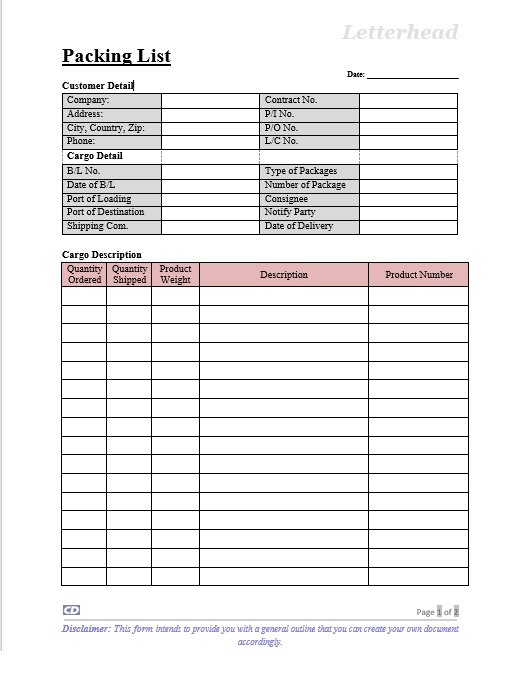
As a part of a Shipping Document, a Packing List details the inventory of goods or items shipped on consignment. It typically accompanies the shipment and provides essential information about the contents, quantities, and packaging of the goods. It’s better if you ask the Exporter to stick a detailed packing list on each package.

Core Elements of a Consignment Packing List
The consignment packing list typically includes the following information:
- Description of each item or product, including product codes or identifiers if applicable.
- Quantity of each item included in the shipment.
- Packaging details, such as the number of cartons, crates, or pallets.
- Weight and dimensions of each package.
- Any special handling instructions or requirements.
- The sender’s and recipient’s contact information and addresses.
- Date of shipment and any reference numbers or identifiers associated with the shipment.
Including a consignment packing list with the shipping documents helps ensure accuracy in inventory management, facilitates customs clearance procedures, and provides documentation in case of disputes or discrepancies.
Importance of Accuracy and Consistency
A P/L must remain consistent with the Commercial Invoice and the Bill of Lading. Any mismatch between descriptions, quantities, or package counts may delay customs clearance, trigger inspections, or cause the shipment to be held for verification. Therefore, exporters often prepare Packing Lists using standardized templates to maintain clarity across multiple shipments.
Consistency also helps freight forwarders, carriers, and customs brokers avoid administrative errors during the transit process.
Role of the Packing List in Customs and Insurance
Customs authorities rely heavily on Packing Lists to validate declarations and ensure that the cargo matches its documented description. Consequently, well-structured Packing Lists reduce the likelihood of penalties, re-inspection fees, or storage charges caused by discrepancies. Moreover, insurance companies may request the P/L when assessing claims for loss, theft, or damage. Clear item descriptions and precise package identifiers strengthen the claimant’s position and help insurers verify the value and nature of the goods more efficiently.
Conclusion
A P/L may seem straightforward, yet it plays a critical role in cargo verification, customs processing, and insurance documentation. When prepared accurately and aligned with accompanying shipping documents, it enhances transparency, reduces risk, and strengthens the overall logistics workflow.
Check out more pages of our website for related content:
- Packing List (P/L) -1
- Open-Package Inspection Procedure (OPI)
- EU Customs Clearance Forms
- Shipping Document (Category)
Access the Full Contract Directory Index
You can browse the complete alphabetical list of all commercial, financial, and project-based contract templates by visiting our A–Z Contract Index.
Reference List
- We Freight – “The Importance of a Packing List in International Trade”
- Cargo Plot – “The Ultimate Guide to Packing Lists for International Shipments: Steps, Template with Examples and Best Practices”
- Shipping Solutions Software – “The Importance of an Export Packing List for Your International Shipments”…

has been added to your cart!
have been added to your cart!

