Estimated reading time: 2 minutes
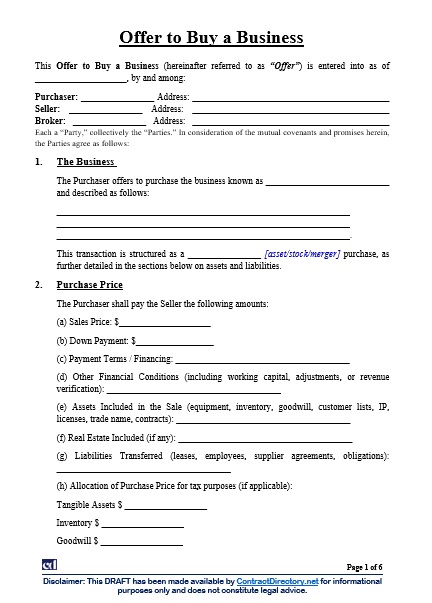
This Offer to Buy a Business is structured as a non-binding offer (often referred to as a Letter of Intent or LOI in business acquisitions), not a final agreement. It outlines the purchaser’s proposed terms for buying the business, but explicitly states that most provisions are non-binding and subject to negotiation of a definitive purchase agreement.
Only specific sections (like confidentiality, exclusivity, expenses, governing law, and indemnification) are binding. If accepted, it would typically lead to further due diligence and a separate, binding purchase agreement at closing.

Function of Binding and Non-Binding Elements
This type of offer separates binding obligations from commercial proposals to create a controlled negotiation environment. The non-binding terms allow both parties to test alignment on price, structure, and expectations without full legal exposure. Meanwhile, binding elements protect confidential data, manage process discipline, and prevent unnecessary negotiation costs. Each section serves a strategic purpose in reducing uncertainty before drafting the final acquisition documents.
How a Non-Binding Offer Shapes Transaction Progress
Once the seller accepts the non-binding business Offer to Buy a Business, the process shifts into structured due diligence. The purchaser reviews financial data, customer relationships, operational systems, contracts, and all liabilities. The seller delivers disclosures that clarify risks and confirm business conditions. These exchanges refine the assumptions behind the proposed terms. Both sides use this stage to assess feasibility, negotiate amendments, and prepare for drafting the binding purchase agreement.
Transition Toward the Definitive Purchase Agreement
After due diligence, the parties begin drafting the final agreement. This step includes detailed representations, warranties, closing conditions, indemnification structures, price adjustments, and transition arrangements. The non-binding offer functions as the directional document that frames these negotiations. It simplifies drafting, reduces disputes, and supports predictable movement toward closing.
Why Non-Binding Offers Remain Essential
Although non-binding, the LOI remains a critical instrument in professional dealmaking. It reduces transaction friction, sets timelines, and aligns expectations early. It also signals commitment while keeping legal flexibility intact. Buyers and sellers rely on this structured approach to avoid surprises, manage resources efficiently, and support informed decision-making before executing binding documents.
Check out more pages of our website for related content:
- Technical Due Diligence Agreement
- Business Buy and Sell Agreement
- Asset Purchase and Transfer Agreement
Reference:
- U.S. Small Business Administration – Buying an Existing Business
- American Bar Association – Private Company M&A Practices
- Harvard Law School – M&A Drafting and Deal Process Notes
- Corporate Finance Institute – Letter of Intent (LOI) Guide

has been added to your cart!
have been added to your cart!

