Estimated reading time: 3 minutes
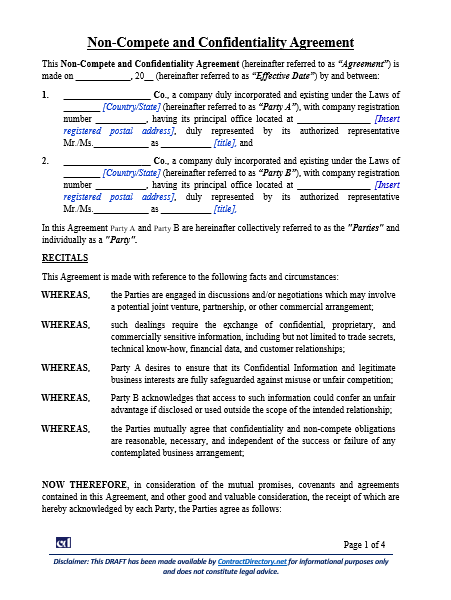
A Non-Compete and Confidentiality Agreement is a legally binding instrument designed to protect the commercial interests of a business by preventing the misuse of sensitive information and restricting unfair competition. This agreement is commonly executed between employers and employees, business partners, or parties engaged in negotiations where trade secrets, strategies, or client relationships are at stake.

Purpose of the Agreement
The agreement has two main purposes. First, it safeguards confidential and proprietary information. The receiving party is prohibited from disclosing or exploiting such knowledge to the detriment of the disclosing party. Second, it prevents the receiving party from engaging in competitive activities during and after the relationship. Together, these protections preserve goodwill, business continuity, and intellectual property while discouraging unfair practices.
Components
A well-drafted agreement defines confidential information, competing activities, geographic scope, and the restricted period. The confidentiality section should cover non-disclosure duties, permitted disclosures under law, the level of care required, and the return or destruction of information at termination. The non-compete section should describe prohibited conduct, time limits, territorial boundaries, and exceptions for activities that do not compete directly. Non-solicitation provisions are equally important. They stop the other party from targeting clients, employees, or suppliers during the restricted period.
Legal Considerations
Enforceability depends on reasonableness. Courts generally uphold agreements only if the scope, time, and geography are fair. Periods beyond three years are often considered excessive. Geographic scope must be limited to areas where the business legitimately operates. Confidentiality obligations, especially regarding trade secrets, can last indefinitely. The agreement must also be supported by valid consideration, such as employment, access to information, or new business opportunities.
Remedies and Enforcement
If a breach occurs, the disclosing party may seek injunctive relief, damages, or both. Injunctions are particularly valuable, since harm caused by disclosure or competition is often difficult to calculate. The agreement may also provide for legal costs, liquidated damages, or equitable remedies. Enforcement shows that the obligations are serious and prevents future violations.
Practical Applications
These agreements are common in employment contracts, joint venture negotiations, acquisitions, franchising, and consultancy arrangements. They reassure businesses that sensitive information will not be misused and that investments in training, brand value, and customer relations are protected. Properly drafted, they build trust and contribute to long-term commercial stability.
Conclusion
A Non-Compete and Confidentiality Agreement is essential in modern business practice. It protects confidential information, prevents unfair competition, and supports fair market behaviour. To be enforceable, it must balance legitimate protection with reasonable scope and duration. When drafted carefully, it is a powerful tool for preserving value and maintaining trust between parties.
Check out more pages of our website for related content:
- Non-Compete Agreement
- Non-Disclosure Agreement (NDA) – Short form
- Business Development Agreement (BDA)
Access the Full Contract Directory
You can browse the complete alphabetical list of all commercial, financial, and project-based contract templates by visiting our A–Z Contract Index.
References
- U.S. Federal Trade Commission (FTC) – “Non-Compete Clauses in the Workplace“ – Explains restrictions on competition, enforceability standards, and policy considerations for non-compete arrangements.
- Information Commissioner’s Office (ICO – UK) – “Employment Practices: Data Protection Guidance“ – Provides direction on confidentiality obligations, handling sensitive information, and protecting business interests.
- European Union Intellectual Property Office (EUIPO) – “Trade Secrets Protection: Legal Framework and Best Practices“ – Outlines confidentiality duties, misuse regulations, and protective measures for commercially sensitive information.

has been added to your cart!
have been added to your cart!

