Estimated reading time: 3 minutes
Definition and Purpose of a Minutes of Meeting (MoM)
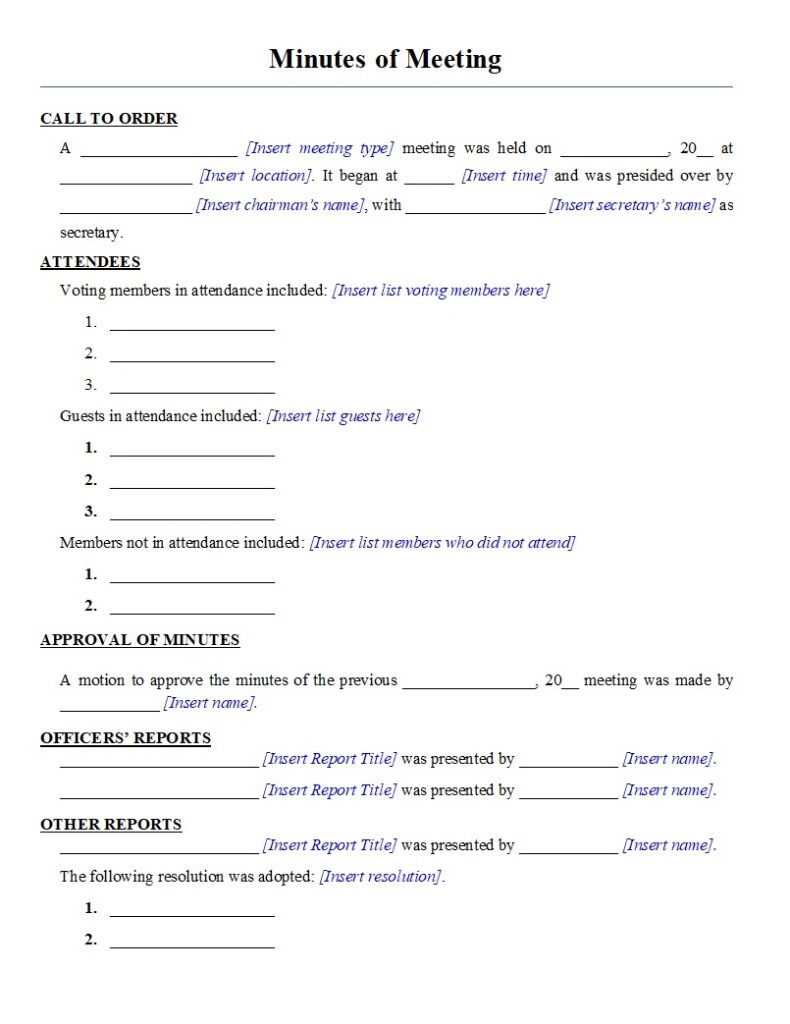
Minutes of Meeting (MoM) are formal written records that summarize the discussions, decisions, and action items agreed upon during a meeting. They serve as an official and permanent record, ensuring that participants and stakeholders have a clear understanding of what transpired, who is responsible for follow-up tasks, and when those tasks are due. Effective minutes not only document proceedings but also provide legal and administrative evidence of decisions made, making them essential for governance, accountability, and project management.
Structure and Components
A well-prepared MoM document typically includes the following components:
- Meeting Details: The title, date, time, location, and list of attendees, including absentees and their designations.
- Agenda Items: A structured list of topics discussed, often following the pre-circulated meeting agenda.
- Discussion Summary: Concise yet comprehensive notes on key points, opinions, and deliberations made during the meeting.
- Decisions and Resolutions: Documentation of outcomes, including approved motions, strategic decisions, or policy changes.
- Action Items: Clearly defined tasks assigned to specific individuals or departments, including deadlines and expected deliverables.
- Next Meeting: Scheduled date, time, and objectives for the subsequent session, if applicable.
By adhering to this structure, organizations ensure clarity, uniformity, and efficiency in communication across teams and departments.
Importance and Benefits
Minutes of meetings hold great significance in both corporate and institutional environments. They:
- Provide an official record of decisions for legal or compliance purposes.
- Facilitate continuity and accountability by tracking actions and follow-ups.
- Enhance organizational memory, enabling new or absent members to stay informed.
- Serve as a reference document for audits, performance reviews, and project evaluations.
- Promote transparency and effective communication within teams and leadership structures.
Moreover, well-documented minutes reduce misunderstandings and ensure alignment between stakeholders.
Preparation Best Practices
To ensure accuracy and professionalism, several best practices should be followed when preparing meeting minutes:
- Take notes objectively without personal bias or interpretation.
- Use clear and concise language to summarize discussions.
- Highlight action points and responsibilities using consistent formatting or bullet points.
- Circulate draft minutes promptly for review and approval by the chairperson or participants.
- Archive approved minutes securely for future reference.
Adopting digital tools or standardized templates can further streamline the process, ensuring consistency and easy retrieval of records.
Access the Full Contract Directory Index
You can browse the complete alphabetical list of all commercial, financial, and project-based contract templates by visiting our A–Z Contract Index.
References:
- Wrike – Meeting minutes template: Guide with examples and action items – This article explains how to structure meeting minutes so decisions and action items are clearly documented and easy to follow.
- Mem – Minutes of Meeting: Best Practices to Follow – This article outlines best practices and a consistent format for creating readable and effective meeting minutes.
- DiliTrust – Minute Examples: Write Clear & Effective Minutes – This article provides practical examples and a free template to help you write concise, actionable meeting minutes …

has been added to your cart!
have been added to your cart!

