Estimated reading time: 3 minutes
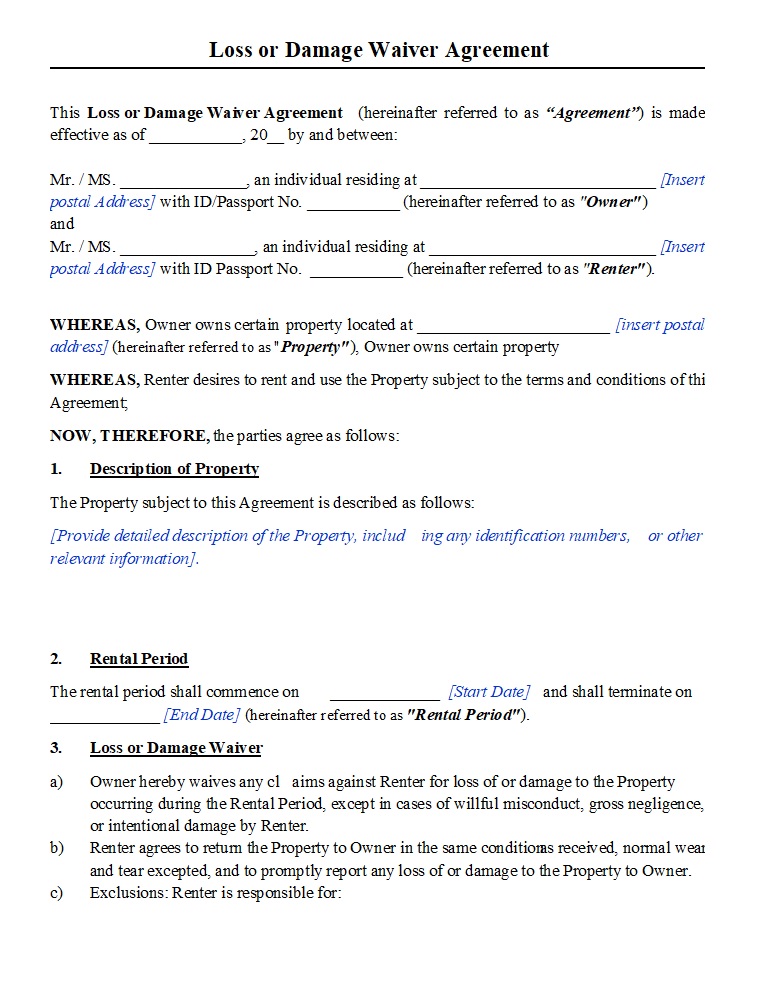
A Waiver of Liability Agreement is a crucial document that clearly defines the responsibilities and liabilities of the involved parties. In this case, it pertains to the Owner and Renter of a specified property.
Setting Clear Expectations
A Waiver of Liability Agreement sets clear expectations and protects both parties from potential disputes or misunderstandings. It outlines the specific circumstances under which each party may be liable or exempt from liability for any loss or damage during the rental period. This clarity is crucial for both the Owner and Renter to prevent any ambiguity or confusion about their responsibilities.
Understanding the Waiver of Liability Agreement Terms
Both the Owner and Renter must understand the terms laid out in the Waiver of Liability Agreement. This agreement specifies the rights and obligations of each party, including how the Property can be used. By detailing these terms, the agreement helps prevent potential conflicts. It ensures that both parties are aware of their responsibilities.
For example, it includes specific conditions that might affect liability, such as damages caused by natural disasters or negligence.

Limiting Liability and Risk Allocation by a Waiver of Liability Agreement
The primary goal of the Agreement is to limit liability for both parties and allocate risk fairly. The Owner is not liable for damages caused by the Renter’s negligence or misuse of the Property. Conversely, the Renter is protected from claims related to pre-existing conditions of the Property, as long as these conditions are clearly documented. This fair allocation of risk is essential for building a trusting relationship between the parties.
Ensuring Compliance and Customization
When drafting the Agreement, it is crucial to ensure compliance with local laws and regulations. Both the Owner and Renter should seek legal advice to ensure the agreement is legally binding and fair. Additionally, the agreement should be tailored to reflect the unique circumstances of the rental arrangement. This customization ensures that all relevant aspects are covered and that the agreement meets the specific needs of both parties.
You may also like to have a look at “Contractor Liability Waiver Form”
References:
- ezLandlordForms – Release of Liability and Assumption of Risk – The article details how a Waiver of Liability Agreement protects landlords from claims related to tenant-caused injuries or damages on rental properties, while highlighting legal limitations and the importance of state-specific compliance.
- Genie AI – Liability Waiver For Rental Property – United States – This resource offers a template for a Waiver of Liability Agreement that shields property owners from lawsuits stemming from tenant use, including provisions for risk assumption, indemnification, and property hazards.
- The Rent. Blog – Liability waiver – The piece explains liability waivers in rental contexts as documents where tenants acknowledge risks and release landlords from responsibility, covering types, enforceability, and their integration into lease agreements…

has been added to your cart!
have been added to your cart!

