Estimated reading time: 2 minutes
Letter of Variation in Contract Management
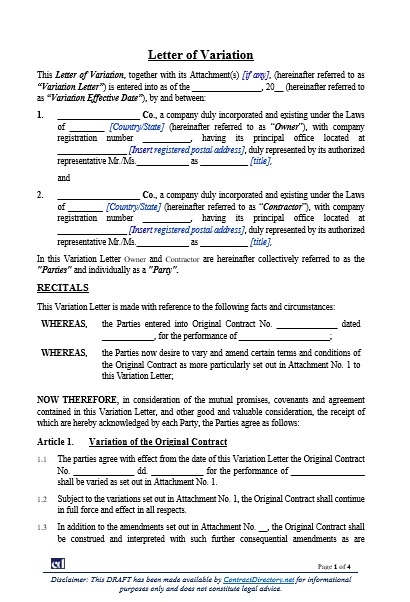
A Letter of Variation plays a central role in construction and service contracts where the scope of work, costs, or timelines require formal modification. It ensures transparency, prevents disputes, and provides both parties with a legally binding record of agreed changes. This document becomes especially important when unexpected site conditions, design revisions, or regulatory requirements arise during project delivery.

Purpose and Function
The purpose of a Letter of Variation is to amend the original contract while keeping the rest of the agreement intact. Instead of redrafting the entire contract, the parties issue a variation letter that clearly identifies the adjustments. Common reasons include changes in the scope of work, adjustment of the contract sum, and extension or reduction of the completion date. The function of this letter is to safeguard the interests of both parties and to ensure the continuity of the project without ambiguity.
Main Components
A professionally drafted Letter of Variation contains several essential elements. It begins with references to the original contract, including its number and effective date. It then sets out the details of the variation, usually in attachments or schedules. Compensation and financial adjustments must be precisely stated, covering price increases, reductions, or credits. The document also specifies how payments for variations will be handled and whether additional invoices will be required. A critical component is the adjustment to the completion date, ensuring the project program aligns with the changed scope.
Practical Considerations
Employers, contractors, and consultants must exercise diligence when drafting a Letter of Variation. The terms should prevent overlapping claims, define the limits of financial settlement, and clarify the prohibition of undocumented variations. Adjustments to completion dates should account for warranties, maintenance periods, and liquidated damages. Both parties must sign through their authorised representatives to formalise the changes. By doing so, they confirm their intention to remain bound by the original contract, subject only to the agreed amendments.
Check out more pages of our website for related content:
References:

has been added to your cart!
have been added to your cart!

