Estimated reading time: 2 minutes
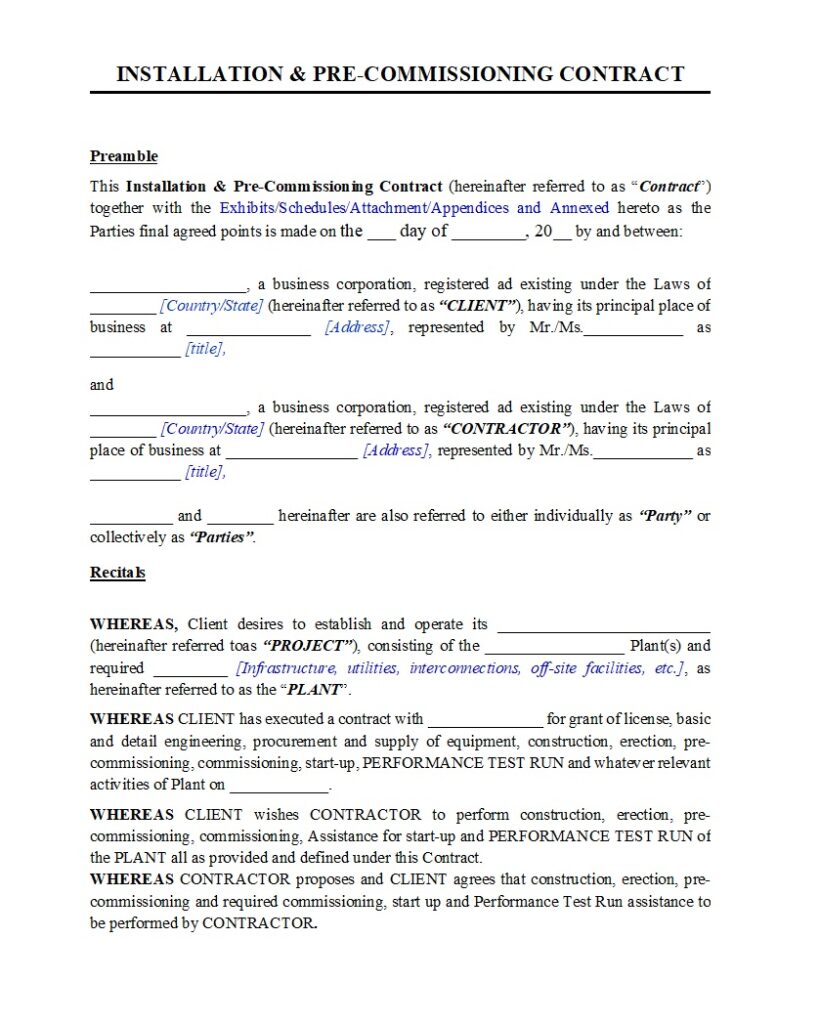
An Installation & Pre-Commissioning Contract is an agreement between a client and a contractor. It defines how installation and pre-commissioning activities will be performed for a project. The contract ensures proper setup, testing, and preparation before commissioning.
Purpose and Function
The contract governs two linked phases. Installation involves positioning equipment, connecting systems, and integrating components. Pre-commissioning follows with inspections, calibrations, and functional testing. Together, these steps ensure systems are safe and ready for operation.

Main Components
This agreement outlines the scope of work, technical specifications, deliverables, and timelines. It also covers payment terms, quality standards, and safety obligations. The contract may include warranty provisions, performance tests, and clear dispute resolution methods. Well-defined terms reduce risks and improve accountability.
Legal and Commercial Significance
Clients use this contract to secure reliable installation and preparation. Contractors gain certainty about requirements and payment. The agreement creates a legal framework that protects both parties. It enforces compliance with safety laws, quality standards, and industry regulations.
Conclusion
An Installation & Pre-Commissioning Contract provides structure and clarity for critical project phases. It balances risk, protects investments, and ensures systems are delivered safely and effectively. Its role makes it vital in successful project execution.
Some related templates:
- Secondhand Plant Sale and Purchase Agreement
- EPC Contract (Turnkey)
- Engineering, Procurement, and Construction Contract (EPC)
- Engineering, Procurement, Construction, and Finance Agreement (EPCF)
References
- ISO – International Organization for Standardization
- FIDIC – International Federation of Consulting Engineers
- Practical Law – Thomson Reuters
has been added to your cart!
have been added to your cart!


