Estimated reading time: 4 minutes
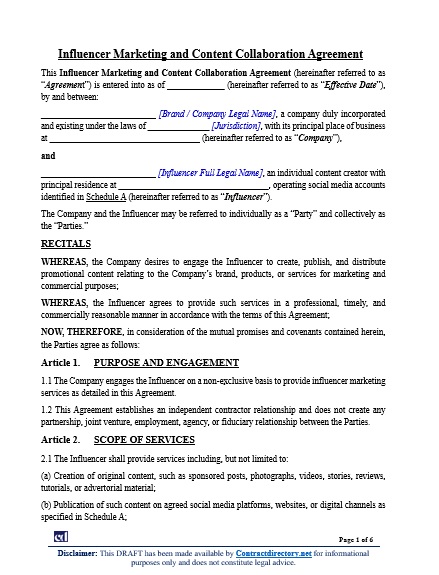
An Influencer Marketing and Content Collaboration Agreement governs how brands and digital creators cooperate in commercial campaigns. It transforms informal promotion into a structured legal relationship. Because influencer activity directly affects brand reputation, regulatory exposure, and consumer trust, this agreement establishes enforceable standards for content creation, disclosure, and performance. As a result, both parties operate with clarity and reduced commercial risk.

Purpose and Function of an Influencer Marketing and Content Collaboration Agreement
The primary purpose of this agreement is to formalise the engagement of an influencer as an independent contractor. It allows the company to commission promotional content without creating employment or agency obligations. Therefore, the brand retains strategic control while limiting legal exposure. At the same time, the influencer receives defined duties, timelines, and compensation, which stabilises expectations on both sides.
Core Components
The agreement defines the scope of services, including content formats, platforms, posting schedules, and engagement targets. Approval clauses regulate brand messaging before publication. Disclosure provisions ensure compliance with advertising and consumer protection laws. Morality and brand-safety clauses protect reputation. Compensation structures link payment to delivery and performance. Intellectual property terms grant the brand usage rights while preserving creator ownership. Data privacy clauses restrict access to aggregated analytics only.
Operational Risk and Enforcement Controls
Influencer campaigns face risks beyond content quality. Platform algorithm changes, policy updates, or public backlash can reduce visibility without fault. Therefore, advanced agreements include content removal rights, clawback provisions, and force majeure clauses. These mechanisms protect marketing budgets and allow rapid response to reputational threats. Without such controls, brands remain exposed to losses that cannot be corrected after publication.
Practical Use and Application
Companies use this agreement to scale influencer campaigns across regions and platforms. It supports both short-term launches and long-term ambassador relationships. Influencers benefit from predictable income and transparent expectations. Because AI-assisted content and cross-border audiences increase regulatory scrutiny, written standards reduce disputes and enforcement costs.
Common Challenges and Mistakes
Vague deliverables weaken performance enforcement. Missing disclosure rules trigger regulatory penalties. Weak intellectual property clauses limit content reuse. Poorly defined exclusivity leads to conflicts with competing brands. Ignoring data privacy boundaries risks unlawful data sharing. Each drafting gap silently shifts risk to one party.
Final Note
An Influencer Marketing and Content Collaboration Agreement is not a marketing formality. It is a risk-allocation instrument that protects reputation, ensures compliance, and secures commercial value. When drafted precisely, it converts creative promotion into a controlled and enforceable business asset.
“Looking for a different framework? Browse our full A-Z Index of Legal Templates“
Glossary of Influencer Marketing Terms
- Independent Contractor
- A relationship where the Influencer is not an employee, but a separate business entity responsible for their own taxes and tools[cite: 668].
- Deliverables
- The specific items the Influencer must provide, such as the number of posts, videos, or stories specified in the schedule[cite: 675].
- Morality Clause
- A provision that allows the brand to terminate the deal if the Influencer’s private or public conduct harms the brand’s image.
- FTC Endorsement Guides
- Legal rules requiring influencers to clearly disclose paid partnerships using tags like #ad or #sponsored[cite: 699].
- Intellectual Property (IP) License
- The creator keeps ownership of the content but gives the brand permission to use and distribute it for marketing[cite: 703, 704].
- Claw back Provision
- A clause allowing the brand to reclaim payments if engagement targets aren’t met or if fraudulent activity is found.
Reference:
- Harrison Clark Rickerbys – Use of influencer marketing agreements – key considerations – This article discusses essential factors to consider when negotiating influencer agreements, focusing on roles, responsibilities, and mutual expectations.
- Sullee Law – What Every Influencer and Brand Should Include in Their Contract – The piece outlines critical provisions for influencer contracts, including content ownership, usage rights, and compliance requirements.
- IP Tech Blog – The Rise of Influencer Marketing – Contractual Considerations – This blog explores key contractual aspects of influencer marketing agreements, such as deliverables, compensation, and intellectual property rights. …

has been added to your cart!
have been added to your cart!

