

Estimated reading time: 3 minutes
External Debt: Definition and Context
External debt refers to the total financial obligations a nation owes to foreign creditors — including governments, international lenders, and private institutions. Unlike domestic debt, which circulates within the local economy, external debt directly exposes nations to global market fluctuations, exchange rate volatility, and the cost of international borrowing.
In developed economies, high debt often reflects mature credit systems and deep capital markets. But in developing nations, excessive external borrowing signals structural fragility, limited fiscal discipline, and dependency on foreign funding.
Top 20 Countries with the Highest Real External Debt (2024)
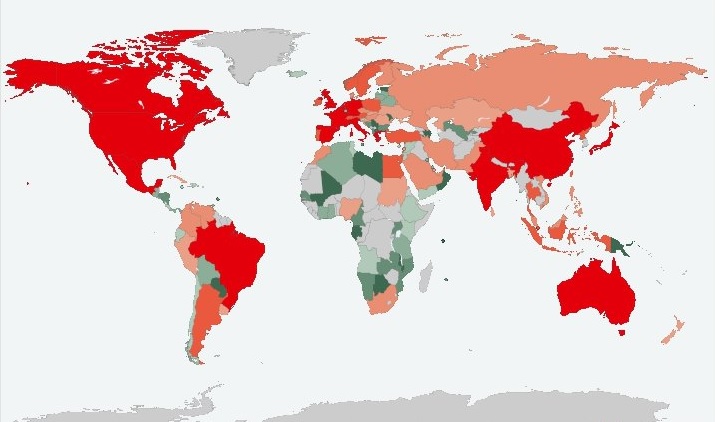
| Rank | Country | Approx. External Debt (USD) | Source / Estimate |
| 1 | United States | 26 trillion | IMF / World Bank |
| 2 | United Kingdom | 9 trillion | ONS / IMF |
| 3 | France | 7 trillion | World Bank |
| 4 | Germany | 6 trillion | IMF |
| 5 | Japan | 4 trillion | IMF |
| 6 | Italy | 1.8 trillion | IMF |
| 7 | Spain | 1.7 trillion | IMF |
| 8 | Canada | 1.6 trillion | IMF |
| 9 | Australia | 1.4 trillion | IMF |
| 10 | China | 2 trillion | CEIC / BIS |
| 11 | India | 620 billion | World Bank |
| 12 | Brazil | 580 billion | IMF |
| 13 | Mexico | 550 billion | IMF |
| 14 | Turkey | 450 billion | IMF |
| 15 | South Korea | 440 billion | IMF |
| 16 | Indonesia | 420 billion | IMF |
| 17 | Russia | 390 billion | IMF |
| 18 | Saudi Arabia | 310 billion | IMF |
| 19 | Argentina | 290 billion | IMF |
| 20 | South Africa | 280 billion | IMF |
(Excluding financial hubs such as the Netherlands, Switzerland, and Luxembourg)
Debt Implications for Global Stability
External debt remains one of the clearest indicators of financial exposure in the international system. It influences sovereign credit ratings, investor sentiment, and policy choices. When borrowing exceeds productive capacity, repayment pressures force governments into austerity or refinancing cycles — often at the cost of long-term growth and social stability.
For major economies like the U.S., Japan, and Germany, the magnitude of debt is offset by investor trust, currency strength, and institutional credibility. In contrast, emerging markets face higher costs of capital and limited access to refinancing, making their external obligations more sensitive to global rate changes.
Overview
The pattern of global indebtedness highlights a widening gap between borrowing capacity and repayment strength. Sustainable debt management is no longer about reduction alone — it’s about balancing external exposure with real economic output and ensuring that national borrowing serves long-term stability rather than short-term survival.
References
- International Monetary Fund (IMF). World Economic Outlook Database, April 2024. Washington, D.C.: IMF.
- World Bank. International Debt Statistics 2024. Washington, D.C.: The World Bank Group.
- Bank for International Settlements (BIS). Total Credit to the Non-Financial Sector – Global Debt Statistics. Basel: BIS, 2024.
- CEIC Data. Global External Debt by Country – 2024 Dataset. CEIC Global Indicators.
- OECD Statistics. General Government Gross Debt and External Liabilities (2024). Paris: Organisation for Economic Co-operation and Development.
- Office for National Statistics (ONS), United Kingdom. UK Economic Accounts: National Balance Sheet 2024. London: ONS.
- Statista. Total External Debt of Selected Countries Worldwide 2024. Hamburg: Statista Research Department.
Related Topics:
#ExternalDebt #IMF #WorldBank #DebtCrisis #GlobalFinance #SovereignDebt #EconomicPolicy #PublicDebt #DebtManagement
