

Sudden U.S. tariff increases (Called as Tariff War) can disrupt long-term, fixed-price contracts, leading to financial pressure, compliance challenges, and risks of unintentional breaches. This article explores how proactive mechanisms, such as tariff-specific escalation clauses, can mitigate these impacts. By incorporating flexible provisions, businesses can manage risks and foster cooperation in unpredictable trade environments.
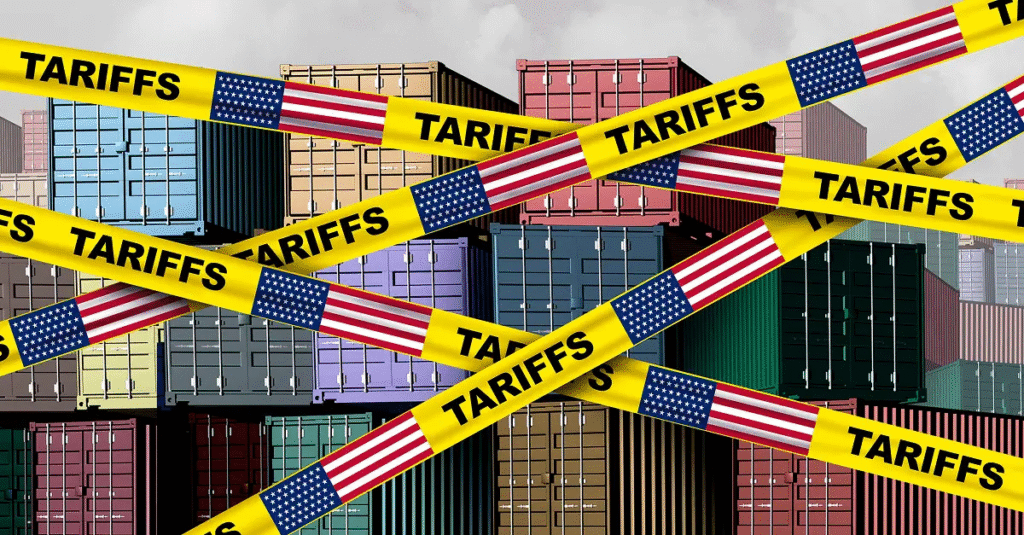
1. Introduction of US Tariff War
Sudden U.S. tariff war increases, especially when unanticipated, pose serious risks for parties who have pre-existing contractual obligations. Fixed-price long-term and running contracts, supply commitments, and tight margin deals are particularly vulnerable. Without protective drafting, one side may bear a crippling cost shock or face claims of breach.
2. Why Tariff Risk Needs Its Own Contract Architecture
| Common Pitfall | Consequence | Better Approach |
|---|---|---|
| Relying only on Force Majeure | Courts construe FM narrowly; mere cost increases often not enough | Explicit reference to tariffs/government actions + hardship clause |
| Unilateral surcharges | Counterparty may reject or claim breach | Pre-agreed change-in-law pass-through or EPA clause |
| Incoterm misalignment (e.g. DDP by default) | Unexpected duty exposure | Choose Incoterms that match your risk appetite |
| No renegotiation path | Deadlock or litigation | Hardship + renegotiation + expert fallback |
| Ignoring UCC / legal backstops | Lost leverage in U.S. goods contracts | Use UCC §2-615 as a backstop (with notice/audit) |
3. What the Courts & Doctrine Actually Allow
- Force Majeure in U.S. common law is interpreted strictly. To capture tariff events, the clause must expressly mention “tariffs/customs duties” or “governmental action/regulations”. General cost increase disclaimers typically won’t suffice.
- If Force Majeure is too narrow, UCC §2-615 (impracticability) can offer relief in sale-of-goods contracts—provided a contingency (like tariff shock) was unforeseeable, performance is commercially impracticable, and you give timely notice and allocation.
- In international contracts, Hardship doctrines such as those in the UNIDROIT Principles allow renegotiation if unforeseen events upset the contract’s equilibrium. If renegotiation fails, adaptation or termination may follow.
- Change-in-law/regulatory risk allocation is now a standard “battlefront” in global contracts. Many legal advisories urge drafting explicit pass-through or shield mechanisms.
- Incoterms matter — enormously. If you deliver DDP (Delivered Duty Paid), you implicitly assume all import duties/tariffs. Using FCA, FOB, or EXW can shift tariff risk.
4. Modular Drafting Additions (Plug-and-Play)
4.1 Change-in-Law (Tariff) Pass-Through
“If, after the Effective Date, any law, regulation, or governmental action imposes or increases tariffs, customs duties, or trade measures applicable to the Goods or Services, the incremental cost (net of exemptions, drawback, refunds) shall be passed through to Buyer as a separate line item. Seller shall provide documentation (HTS codes, duty rates, official rulings, customs entries) within [10] business days of notice.”
4.2 Economic Price Adjustment (EPA)
“Prices shall be subject to quarterly adjustment using:
(i) a recognized industry index (e.g. PPI, metal indices) for raw materials, and
(ii) the actual verified tariff delta on affected inputs.Trigger threshold: no price adjustment unless cumulative tariff + index adjustments exceed 5% of the contract price over a rolling 12-month period.
Adjustments apply only to affected items, not the entire contract. Quarterly cap = [X]%, floor = 0%. Parties exchange adjustment worksheets and records no later than [10] days after quarter end.”
4.3 Incoterms Alignment
“Unless otherwise stated, delivery shall be FOB (or FCA). If DDP (Delivered Duty Paid) is chosen, Seller bears all import duties and tariff risk, which must be separately priced and disclosed.”
4.4 UCC §2-615 (Goods Contracts Only, U.S. Law Backstop)
“If performance becomes commercially impracticable due to an unforeseen contingency (such as sharply increased tariffs), Seller may be excused to the extent of impracticability, provided notice is timely and Seller reasonably allocates among its customers. This is in addition to (not in place of) the above Force Majeure / Hardship mechanisms.”
4.5 MAC / MAE (for transaction / financing context, optional)
“A Material Adverse Effect includes extraordinary tariff or regulatory actions that cause a materially significant and durable escalation in cost, supply disruption, or performance burden, excluding normal market volatility or cyclical fluctuations.”
4.6 Evidence, Audit & Mitigation Protocol
“Claims under FM, Hardship, Change-in-Law, or EPA must include:
• HTS classification and applicable duty rates (pre- and post-change)
• Official customs rulings or notices
• Actual supplier / tariff notices
• Mitigation steps taken (alternative sourcing, reclassification, duty drawback)
• A detailed impact worksheet isolating affected items only
• Timely written notice and prompt cooperation with counterparty audit requests.”
5. Updated Force Majeure & Hardship Clause
Force Majeure & Hardship Annex
Article A1 – Definitions & Scope
a) Force Majeure includes events beyond reasonable control, such as acts of God, war, terrorism, epidemics, governmental actions, imposition or increase of tariffs or customs duties, and regulatory changes materially hindering performance.
b) Hardship / Tariff Impact in Tariff War occurs where an event (including tariff changes) causes an unforeseeable cost increase exceeding 5% (or agreed threshold) of the original contract price—calculated on the affected goods or services—even if performance remains possible but becomes excessively burdensome.
Article A2 – Notice & Documentation
The affected Party must notify the other Party in writing within [X] business days of any Force Majeure or Hardship event, describing:
(i) nature of event,
(ii) estimated impact on performance,
(iii) mitigation efforts,
(iv) supporting documents (HTS codes, duty changes, supplier notices, invoices, entries).
Article A3 – Suspension & Mitigation
Performance of obligations impacted by the event is suspended for the duration of the event. The affected Party shall take all reasonable efforts to mitigate costs (alternative sourcing, duty drawback, reclassification, etc.).
Article A4 – Renegotiation & Price Adjustment
Upon occurrence of a Force Majeure or Hardship event, the Parties shall renegotiate in good faith to adjust price, schedule, or other relevant terms to restore commercial equilibrium.
- If renegotiation within 30 days succeeds, the adjusted terms are binding.
- If no agreement is reached within 30 days, the Parties may submit to expert determination or arbitration to modify or adapt this contract equitably.
Article A5 – Termination
If the event persists beyond [90] consecutive days and defeats the contract’s commercial purpose, either Party may terminate by written notice. Neither Party is liable for damages except for obligations accrued before termination.
Article A6 – Audit, Allocation & Exclusivity
Claims must be subject to audit by the non-claiming Party. Any adjustment, suspension, or termination under this Schedule A is exclusive of, and in preference to, any competing claim under common law, UCC, or equity.
References
- K&L Gates – Impact of Tariffs on Commercial Contractual Performance: Can Tariffs Be a Force Majeure Event?
- Skadden – Navigating the Impact of the Trump Tariffs: Contractual Protections and Drafting Tips
- Taft Law – Tariff Uncertainty: Force Majeure Considerations and Strategic Approaches
- Morgan Lewis – Tariff-Related Commercial Litigation: Force Majeure and Common Law Defenses
- UNIDROIT Principles – 2016 Edition, Articles 6.2.2–6.2.3 (Hardship) & 7.1.7 (Force Majeure)
- Arnold & Porter – Hardship and Changed Circumstances as Grounds for Contract Adjustment
- Honigman – Tariffs and Supply Chain Contracts: Key Considerations
- Baker McKenzie – Force Majeure and Doctrines Excusing Contractual Performance
- How Recent Elections Are Shaping Business Policies Worldwide

