As climate change accelerates, the world needs a measurable way to value emission reduction. Out of this necessity, the carbon credit was born — a financial unit representing one tonne of carbon dioxide (CO₂) or an equivalent greenhouse gas that has been removed, reduced, or prevented from entering the atmosphere. This simple idea has grown into one of the most influential tools in global environmental policy.
The Origin of Carbon Credits
The concept of carbon credit emerged in the 1990s, during negotiations leading to the Kyoto Protocol (1997), the first international agreement that bound industrialised countries to reduce greenhouse-gas emissions. The system created a mechanism known as “cap and trade,” where each country or company received a limit (a cap) on emissions and could trade unused allowances or credits with others. The aim was to make carbon reduction measurable, marketable, and economically efficient.
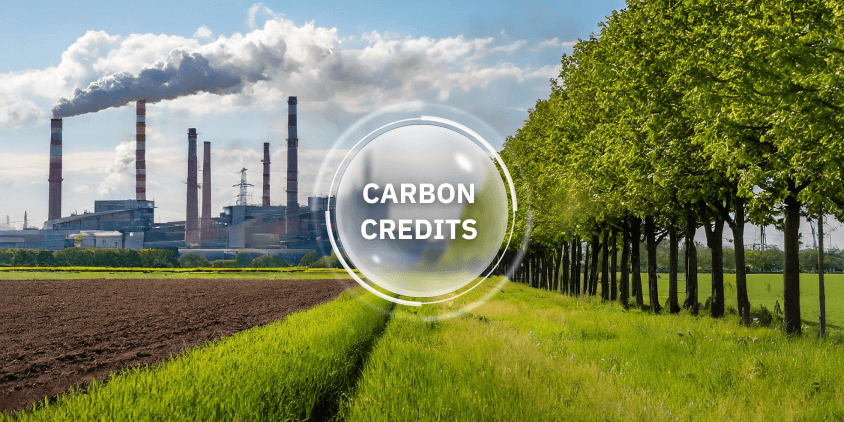
After the Paris Agreement (2015), the model expanded. Developing countries could now also participate by creating projects that generate credits through reforestation, renewable energy, or sustainable agriculture. Each verified tonne of avoided or removed carbon could be sold to other countries or companies, turning emission reduction into a new global commodity.
How Carbon Credits Work
Every carbon credit equals one tonne of CO₂ reduced or removed. When a company emits less than its allowed amount, it can sell the surplus credits. When it exceeds the limit, it must buy credits from others to compensate. This mechanism rewards cleaner behaviour and penalises pollution, using financial incentives to drive environmental responsibility.
There are two major systems: the Compliance Market, established by governments and international treaties, and the Voluntary Market, where corporations or individuals purchase credits to offset their own emissions beyond legal requirements. Both depend on strict verification standards to ensure that each credit represents a genuine, permanent reduction.
Environmental and Economic Impact
Carbon credits have reshaped how governments and industries view climate responsibility. Economically, they place a tangible price on pollution, forcing companies to internalise the cost of their environmental footprint. Ecologically, they direct investment toward low-carbon projects such as solar power, wind farms, forest preservation, and clean transportation.
However, the system also faces criticism. Some argue that carbon trading allows wealthier companies to “buy the right to pollute” instead of making actual changes. Others highlight the need for transparent verification and long-term monitoring to ensure that credited projects truly reduce emissions. Despite these challenges, the mechanism remains one of the most practical ways to align economic growth with environmental protection.
From Policy to Global Practice
Regions such as the European Union have established large-scale emission-trading systems, while countries like China, Japan, and South Korea have launched their own national programs. International organisations, including the World Bank, UNFCCC, and Verra, oversee standards and provide frameworks for reliable carbon accounting. The growing involvement of private investors has also turned carbon credits into an emerging asset class within Green Finance.
The Future of Carbon Credits
As the world moves toward net-zero targets, carbon credits are likely to evolve further. Digitalisation and blockchain technology already enable transparent tracking and tokenisation of credits, while new methodologies measure not only CO₂ but also biodiversity and water impact. The next decade will define whether the carbon credit becomes a universal environmental currency or remains a transitional instrument in the fight against climate change.
Conclusion
A carbon credit is more than a number on a ledger — it represents a measurable action against global warming. By converting emission reduction into a financial value, the system has created a bridge between environmental responsibility and economic growth. Although imperfect, carbon credits remain one of the most powerful mechanisms humanity has developed to place a price on pollution and an incentive on preservation.
See Green Finance: How Sustainability Is Redefining Global Project Funding, and here is the related Agreement :
Green Loan Agreement: How Sustainability Is Redefining Global Project Funding
References
- United Nations Framework Convention on Climate Change (UNFCCC) – Kyoto Protocol and Paris Agreement Frameworks:
- Intergovernmental Panel on Climate Change (IPCC) – Climate Change Mitigation Reports and Emission Reduction Frameworks:
- World Bank – State and Trends of Carbon Pricing 2024
- Verra – Verified Carbon Standard (VCS) Program and Methodologies:
- International Emissions Trading Association (IETA) – Carbon Market Business and Policy Resources:
- World Economic Forum (WEF) – Harnessing Carbon Markets for Global Net-Zero Goals:
Related Topics:
#CarbonCredit #EmissionReduction #KyotoProtocol #ParisAgreement #CarbonMarket #GreenFinance #ClimateChange #Sustainability #CarbonOffset #EnvironmentalPolicy #UNFCCC #NetZero #CleanEnergy #GlobalWarming #ContractDirectory

